
Starting in January 2026, a new system of shared micromobility regulation will take effect in Prague. On Monday the City Council approved a measure that completely bans the operation of shared electric scooters. At the same time, it also introduces a new fee for shared bicycles, which until now had operated without such regulation.
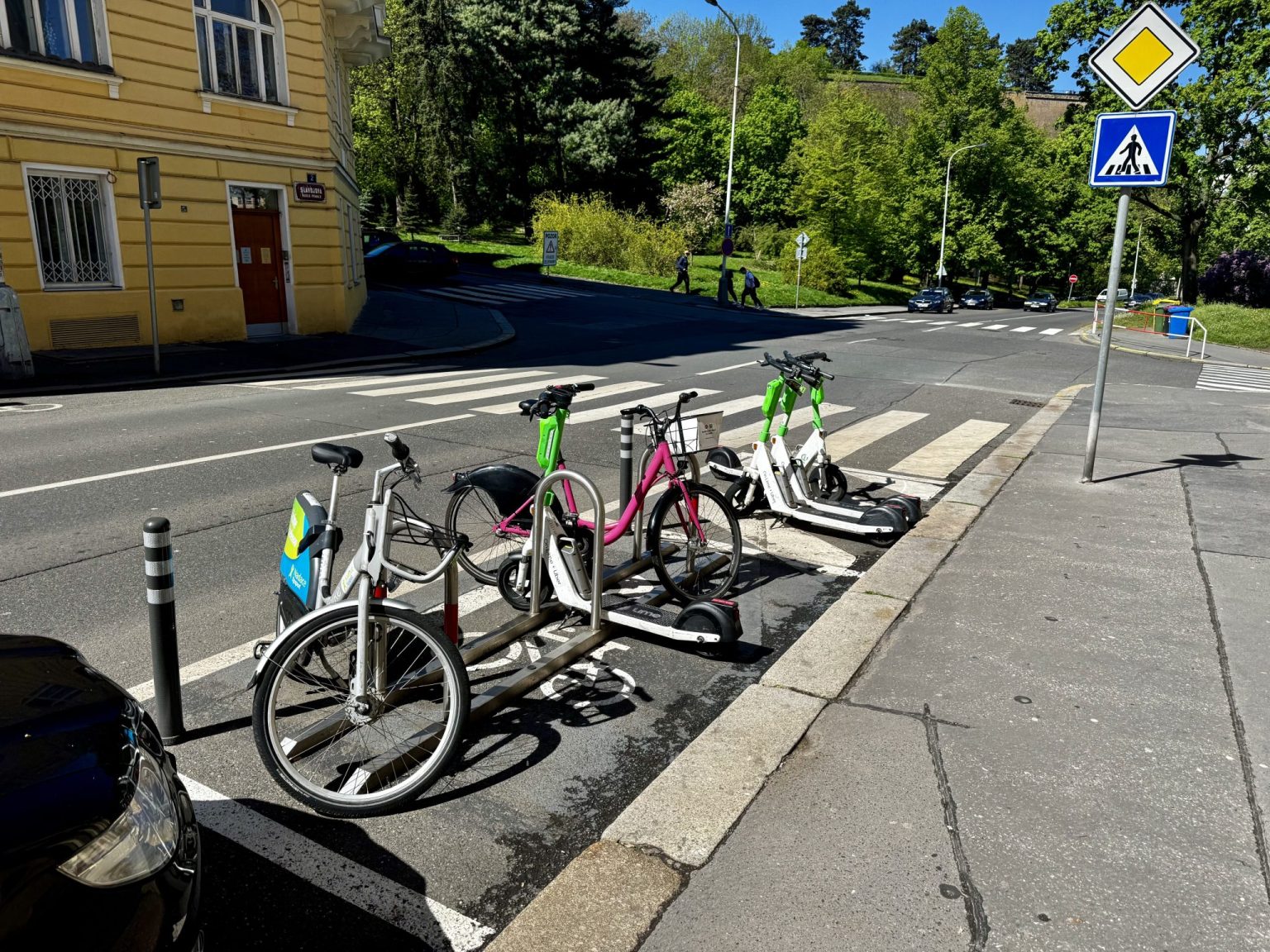
The new regulation is based on a contractual framework between operators and the Technical Administration of Roads (TSK). The foundation for these contracts is a special permit for the use of public space, granted by the City Council to TSK. Based on this authorization, TSK will then be able to contractually grant access to public areas to other companies — i.e., operators of shared bikes. Shared bikes will only be allowed to park in designated areas determined by the city. They will not be allowed to park anywhere else on Prague’s public land.
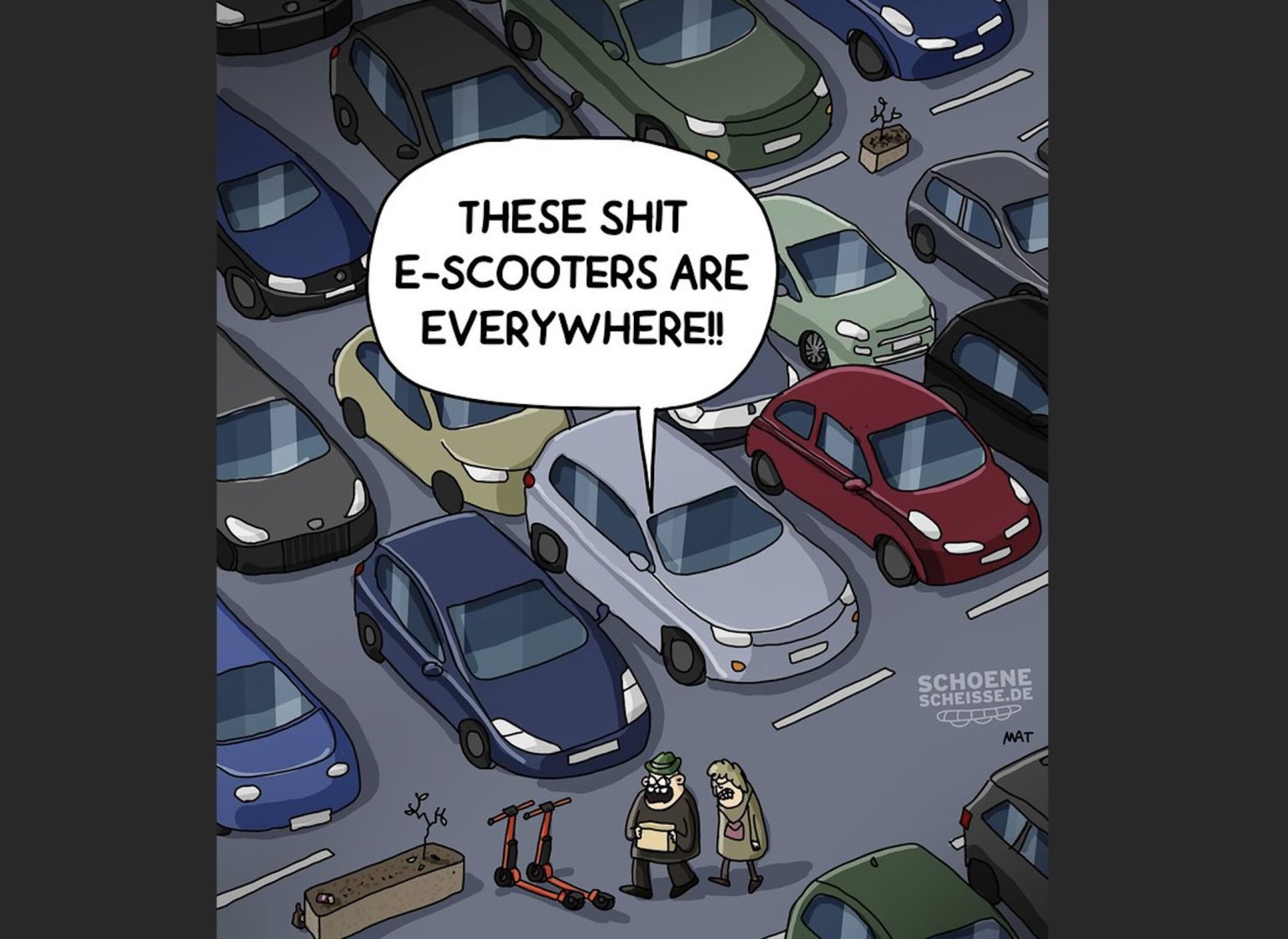
No such designated parking areas will be allocated for shared e-scooters, effectively making their operation impossible. According to the Deputy Mayor for Transport, Zdeněk Hřib (Pirates), this is a response to long-standing public criticism and a step toward a safer and more orderly public space. It’s worth noting that — unlike some proposals from Prague 1 District — this regulation applies only to shared scooters on city-owned land. The use of privately owned e-scooters will not be affected.
The ban on shared scooters was long expected and widely discussed — the problem of chaotic parking and dangerous riding on sidewalks had plagued the tourist center for years. The city had repeatedly stated that it found operators’ attempts to fix the issue insufficient.
What’s new is that the new regulation will also extend to shared bicycles. Currently, these bikes do not cause major problems, although perhaps only because they haven’t been the first choice for foreign tourists in the city center. Anyhow, shared bikes are widely seen as a major benefit to the city. Even so, each operator will have to start paying the city 25 Czech Crown per month per bike.
According to calculations by the editorial team of Městem na kole, shared bikes will bring approximately one million Czech Crown annually into the city’s coffers. There are currently around 3,000 shared bikes in Prague, operated by Rekola, Nextbike, Lime, and Bolt. While the amount may seem symbolic, it sends an important signal in terms of city policy.
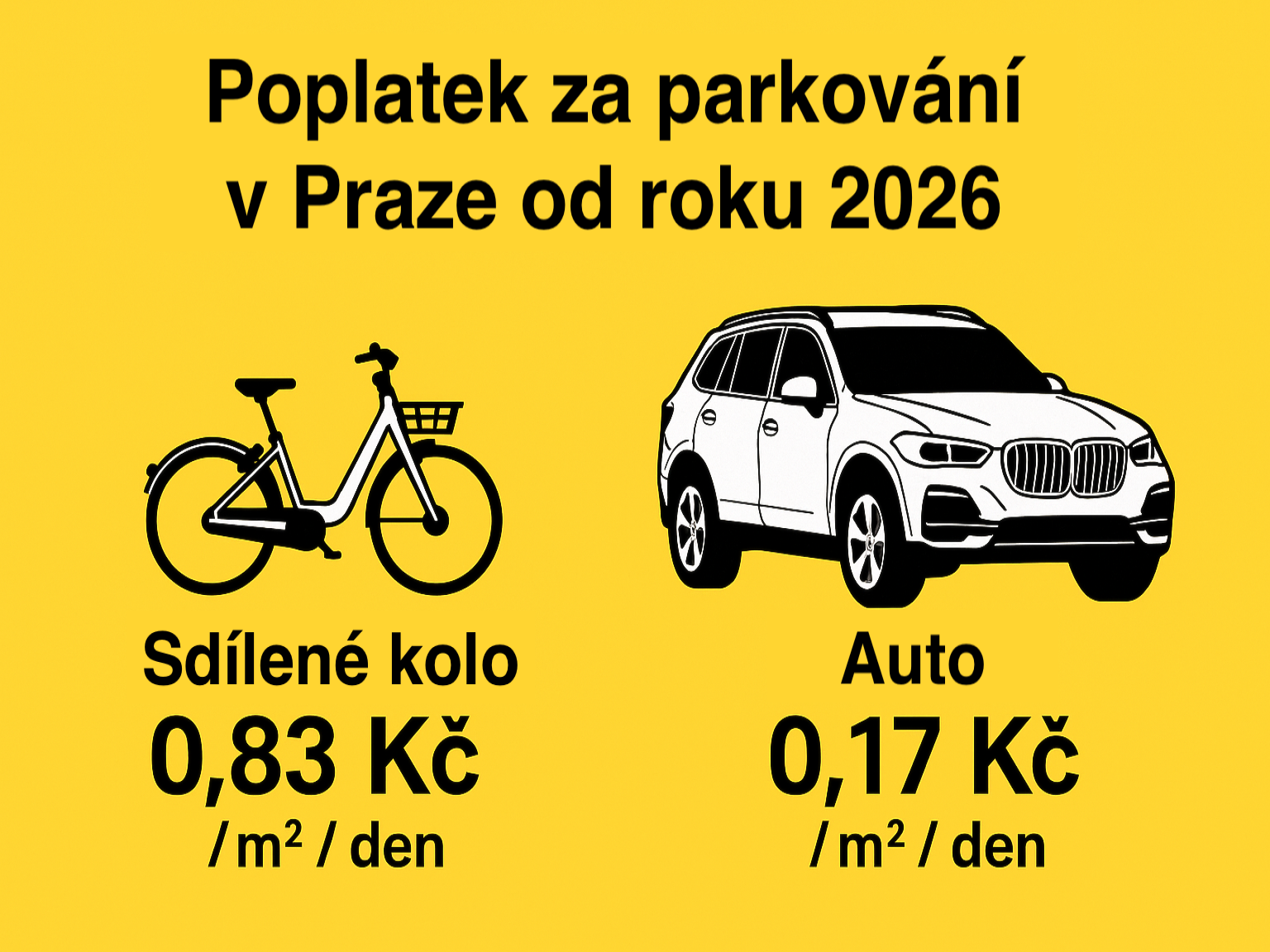
A car parked in a blue zone pays 600–1,200 CZK per year (about 1.6–3 CZK per day), while a shared bike will cost 0.83 CZK per day. Yet the difference in impact on the city is dramatic: a bike takes up only one-eighth of the space, produces no emissions or noise, and is in motion for much of the day. While the city subsidizes car parking, it is now introducing a fee for a service that actually reduces traffic congestion.
Shared bikes mainly serve city residents – typically for short trips or connections to public transport. The city even supports them through integration with the Lítačka transit card, giving subscribers two free 15-minute rides per day. The newly introduced fee thus affects a system that has long benefited the city.
According to a recent analysis by EY, bike-sharing systems bring measurable economic and social benefits. In Europe they generate benefits worth 305 million euros annually, primarily due to reduced emissions, improved public health, and time savings.
According to EY’s calculations, bike-sharing systems reduce emissions by 46,000 tons of CO₂ per year, prevent a thousand chronic diseases, and save European cities over 40 million euros in healthcare costs. In addition, they help create around 6,000 jobs and reduce traffic congestion, providing another 30 million euros annually in time savings.
The study also confirms that it is an economically sound investment: every euro invested in the system returns 10% higher benefits. With further expansion, the benefits could reach up to one billion euros per year by 2030. And it’s not just shared bikes — other studies have shown that each kilometer ridden by bike brings significant socio-economic benefits to cities.
So why is Prague now introducing a fee for one of the most accessible forms of cycling transport?
Prague slightly subsidizes bikesharing as a public service, but now it will also start charging for it. As operators remain concentrated only on densely populated parts of the city, the new fee could create additional pressure to shrink coverage and avoid less profitable areas.
However, Prague needs bikesharing to expand to areas with poor public transport coverage or those overburdened by car traffic. In precisely these neighborhoods, shared bikes could significantly improve mobility for residents who want to efficiently reach public transport stops. An effective “last-mile” solution can greatly reduce dependence on cars. But Prague’s suburbs currently lack such options, since for operators, moving bikes to sparsely populated or residential areas is not financially worthwhile.
A fee like this could provide some motivation — but only if Prague sets it smartly, varying it by parking location, and uses it to encourage the deployment of bikes where they are scarce.
Without such smart adjustments, the new fee will simply mean that operators will think twice about adding new bikes or stations — and might even decide that it’s better to move their bikes to a completely different city.
Yes, a private bicycle can still be parked for free at one of the city’s 1,400 public bike racks. However, shared bikes play a broader role in the city — thousands of people use them daily, including those who don’t own a bike, have nowhere to park one, or are afraid it might get stolen. In doing so, they make cycling accessible to new groups of residents and help Prague reduce its dependence on cars.
It’s worth noting that the fee for shared bikes applies to 1,400 bike stands that are scattered across the city — often requiring people to walk hundreds of meters to find the nearest place to leave a bike. This stands in sharp contrast to the roughly one million public parking spaces for cars in Prague, and only about 300 designated stations for shared bikes.
Yes, setting aside space for shared bikes costs money, the city has to maintain these locations. A discussion about potential fees is justified, but it’s also important to remember that Prague’s cycling infrastructure is still in its infancy and only beginning to develop. Any new fee should primarily serve as a signal to further develop and improve cycling parking facilities — for example, by adding bike racks to existing stands so that not only shared bikes but also private bicycles can use them more easily.
What is a significant signal, however, is that the fee per occupied space will be higher for a shared bike than for a private car. Prague is thus declaring that it wants people to use bikes more — while simultaneously burdening this form of mobility, which demonstrably increases cycling’s modal share in the city, with a parking fee proportionally higher than that for private cars.
The fee itself will not bring any guaranteed improvements — there is currently no indication that the number of parking spots will increase, that existing ones will be equipped with bike racks, that the system will expand to new districts, or that more shared bikes — which Prague actually needs — will be introduced.
The city is therefore sending a contradictory message: for parking a shared bike, it wants 0.83 Crown per day per 1 m², while for a private car, it wants 1.6 Crown per day per 9 m². A car takes up nine times more space in the city’s public area, yet pays only twice as much for occupying the street.
At a time when the city of Zurich is introducing parking fees based on vehicle weight, Prague is symbolically heading in the opposite direction — disproportionately burdening smaller, more efficient, and more sustainable modes of transport.
This is an adjusted machine translation using Automat’s CycleLingo Translator (ChatGPT) of this article: https://mestemnakole.cz/2025/10/komentar-praha-zakazuje-sdilene-elektrokolobezky-doplati-na-to-i-sdilena-kola/
Líbil se Vám článek? Chcete v Česku lepší podmínky pro cyklodopravu?
Podpořte nás, stačí i 100 korun. 💙🚲
Vyberte prosím částku, poté budete přesmerováni na darujme.cz



komentář