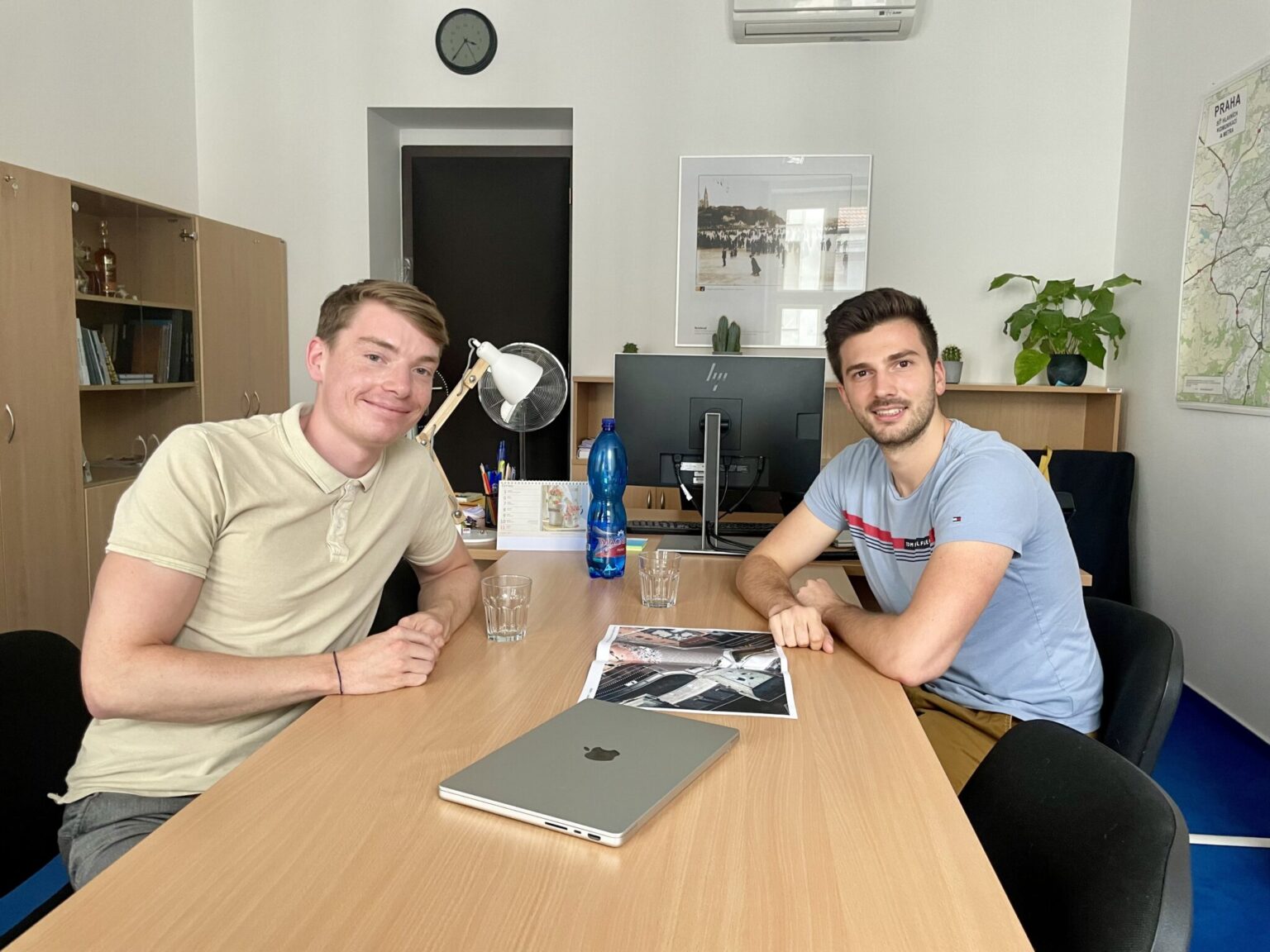
Since the municipal elections, more than a year has passed, and we are asking the councilors responsible for transportation from Prague 1 to Prague 22 about their plans for cycling transportation. We continue in the Prague 2 district, which has nearly 51,000 residents and includes Nové Město, Vinohrady, Vyšehrad, and a part of Nusle. Tomáš Halva, councilor for transportation for TOP 09, responded to our editor Martin Šnobr’s questions.
What is your concept when addressing cycling transportation in Prague 2?
I’ll start with a more general approach. I don’t like it when someone perceives transportation solely in terms of focusing on cycling, on cars, or purely on pedestrians. I believe that transportation, especially in the city, should function in a way that does not unduly restrict any of the users of public space and roads.
My vision is for all participants in traffic to feel safe and for us to create a space that fulfills that idea.
When I look at specific steps that I would like to take in the Prague 2 district, for example, I am not in favor of bike lanes when a separate cycle path can be created in a given location. I would rather support the creation of a safe cycle path. An example of this is Sekaninova Street, where the city suddenly drew a bike lane next to the existing cycle path.
It was a proposal that, however, was not implemented.
Yes, it was part of a proposal; thank you for the clarification. It’s true that a bike lane is the simplest solution. However, what bothers me is that transportation solutions are not considered from a long-term perspective and there is no thought about how to work with space in a way that can accommodate all traffic participants.
Sekaninova Street currently has an unnecessarily wide lane for cars. By narrowing it, we can create space for a physically separated cycle path. At the same time, there must be safe pedestrian pathways and sufficient parking capacity.
It’s not a task that can be solved with the snap of a finger. I am trying to find solutions that make sense.
Prague 2 has had a cycling master plan since 2015, but it has not been successfully implemented yet. What steps are you taking to change this?
I am very sorry that the cycling master plan has not been implemented by the city council to this day. I know that various institutions we’ve spoken to have praised the plan. Prague 2 is hilly, and cycling traffic here is not as prevalent as in flatter areas. This is also reflected in the data on the usage of shared bikes and scooters, with bikes primarily concentrated down by the riverbank and in Nusle, which is the lower part of Prague 2. There isn’t much cycling uphill to Vinohrady without added assistance.
Could the lack of infrastructure also be a contributing factor? There are paths in the valleys, but they don’t lead up the hills.
Of course, it is related to the complex connection between New Town and Vinohrady, and I acknowledge that. For example, a footbridge across Bělehradská is missing.
But back to the cycling master plan. In my opinion, it is well developed, and I certainly want to continue with it. Right now, I am doing everything to see it implemented. One of the first steps is currently an effort to establish a two-way cycling lane on Španělská Street. This is the first „test,“ so to speak, that we want to undertake.
In other locations, it will depend on whether the infrastructure is ready or not. For example, in Wenzigova Street, the construction readiness for two-way cycling traffic is there, but what’s missing is the connection.
It seems to be a bit of a hot potato. Prague 2 says the city council should implement the two-way cycling lanes, while the city council says they don’t want to design something without assurance of implementation. So, what’s the real situation?
I don’t know. But if Prague 2 didn’t want it, it wouldn’t be in our cycling master plan. We are committed to the idea that what we’ve shown should be implemented. If we’ve said we can envision these two-way cycling lanes, let’s make them happen.
At the same time, I’d like to remind you that often it comes down to construction modifications. For example, in Ke Karlovu Street, we are waiting for the City of Prague to extend a bus line running from I. P. Pavlova to Karlovo náměstí through Apolináře, which would free up space for turning buses and prevent dangerous situations for cyclists. This modification was discussed with the former deputy for transportation (Adam Scheinherr, note editor), but it hasn’t been implemented yet.
Then we have more two-way cycling lanes that are simply waiting. They are already planned and waiting for the city’s technical services to mark them. Another two-way cycling lane that would help connect New Town and Vinohrady is Wenzigova, continuing to the footbridge across Bělehradská.
What is the status of the footbridge across Bělehradská Street?
There was some opposition to the project from certain Prague 2 residents. Primarily, this was because the project involved such a massive, imposing footbridge, which could be described as quite overpowering for the location. I believe that the opposition arose due to this reason. It was not in harmony with the surroundings. Additionally, communication from the city council regarding the project was not entirely satisfactory.
As a result, the implementation was halted. It’s important to note that there have been several proposals in the past.
In December of last year, we received a new proposal for a connection, a „funicular,“ from Mr. Scheinherr, the former deputy for transportation. In my opinion, it didn’t meet the needs for pedestrian and cyclist connectivity or for individuals with mobility issues. A funicular would involve waiting, and I don’t think it would be a suitable fit for that area.
Because we didn’t want the funicular, we engaged in discussions with the current deputy for transportation, Mr. Hřib. We conveyed to him that it would be beneficial to reopen the dialogue on the footbridge and explore ways to make it a reality. We have agreed to hold a public discussion with the residents for this purpose, so that we can explain and defend why we want this footbridge.
From what we understand, there was a group of people living in the vicinity who were opposed to it, and we want to know their perspective on this location. It is crucial to me that there is a dialogue among all parties, and the proposal is not presented by just one group, as happened with the previous proposal.
Back to the two-way cycling lanes… How determined is Prague 2 in advocating for them?
The two-way cycling lanes that are currently proposed in our cycling master plan are definitely something we want and will strive for. As I mentioned, it’s not always about whether the Technical Road Administration (TSK) is willing to paint them, but it also depends on the related construction work, which may require waiting for implementation. It’s important that the implementation serves a purpose and has a logical connection. In Španělská Street, there is not much need for extensive construction work, so we are pushing for its implementation.
Do you have any information on whether the project work has started on Španělská Street?
I can’t provide a specific timeline.
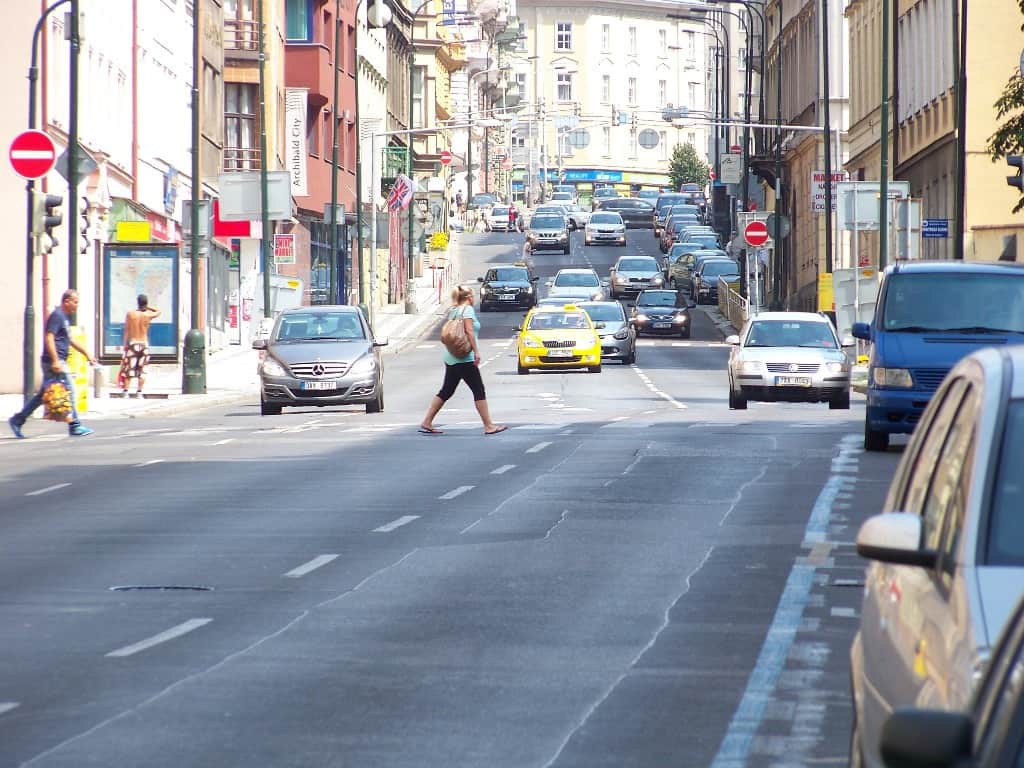
Your cycling master plan suggests the implementation of a bike lane on Legerova Street along the main road. How do you generally feel about humanizing this street that crosses Prague 2?
I understand that the cycling master plan was developed at a certain time and it’s a binding document we adhere to, but it doesn’t have to be an absolute. Here, I want to address the bike lane on Legerova Street. I can imagine that it might not need to be a bike lane, but rather a separate bike path. In my opinion, if we narrow the width of the lanes, there will be space for a separated bike path.
Could it be a two-way cycle path?
Personally, I prefer to have a one-way bike path on one side and another on the other side, just like the lanes for cars. This is something I can imagine and support. We are also discussing the humanization of the main road with a colleague who’s responsible for the environment. There should be a tree-lined avenue there. In some places, there are currently four lanes, and perhaps there doesn’t need to be so many. However, I don’t want to jump ahead on this because discussions are ongoing with Prague City Council, the Institute of Planning and Development (IPR), and TSK. I wouldn’t like to pre-emptively present it.
We want to follow up on what we requested for Prague 2 a decade ago. In Legerova Street, there were four lanes, and we requested narrowing them and creating parking capacity and crossings (the Legerova and Sokolská Streets are the responsibility of the City of Prague’s Technical Road Administration). At that time, it was said that those concrete blocks (city blocks) would be a temporary solution. Unfortunately, they are now there for more than ten years already…
It’s not great for a temporary solution to last so long, so it would be appropriate for us to pull together and do something about the main road.
Are you talking about temporary adjustments that could be made without building permits, or is it a longer-term plan?
Certain things can be done without construction modifications, but most of them cannot. For example, the tree-lined avenue. I don’t think it’s something we can complete in this electoral term, but we would like to start planning it during this term or even initiate the implementation. It’s not only a matter for Prague 2 but mainly for the City Council, which acts as the road administration for the north-south main road. I will support any solution that makes sense and doesn’t create congestion in Prague 2.
Will any part of the humanization of the main road be realized during this electoral term?
I don’t rule it out. And I don’t want this to sound like nothing will happen during this term. For instance, we are planning some changes at the I. P. Pavlova intersection, which might be achievable in this electoral term.
The north-south main road is also connected to Ječná and Žitná streets, which are currently unpleasant for cycling. Do you plan any changes there?
We want cycling improvements to be created in streets connected to the north-south main road. I can imagine that a separate bike path will be built on Ječná Street, connecting Karlovo náměstí and Vinohrady, without restricting cars, public transportation, or pedestrians in any way. I’m not saying it’s an easy task; it will require a lot of project work. But I think many people will appreciate it.
So, will there be a reconstruction of the tram tracks on Ječná?
The transportation company has been requesting long-term reconstruction.
Is it something we can expect as the next step after completing the tram track on Wenceslas Square?
I can’t say when it will happen. That depends on the City Council. At the moment, we don’t even have project documentation for the reconstruction of Ječná Street. TSK should include the reconstruction of Ječná Street in the planning of the north-south main road because these roads are directly connected. (Note: In the previous week, TSK issued a request for a project for the reconstruction of Ječná Street.)
You mentioned that on Ječná Street the new bike path will preserve space for cars, public transport, and pedestrians. But adding a bike path will narrow the sidewalk, right?
The bike path could be located on the part of the sidewalk that is wider in the uphill direction. Of course, during the reconstruction, some technical equipment may need to be moved so as not to obstruct the bike path, but that’s getting ahead of ourselves – it’s something the designers will have to manage.
What about the contraflow bike lane in Žitná Street to connect to the existing one at Karlovo náměstí?
I disagree with that one, and it’s not in our cycling master plan. The implementation of the lower part of Karlovo náměstí is already in conflict with our cycling master plan. Another issue is that a contraflow bike lane along the entire length of Žitná Street wouldn’t fit. I can’t imagine a contraflow bike lane there, given how busy the street is.
I don’t know if you’ve seen that project… The bike lane was supposed to be safely positioned behind a row of parked cars, similar to Na Příkopě Street.
It can only be implemented in the lower part of Žitná Street, given the sidewalk width. In the upper part above V Tůních Street, Žitná Street narrows, and the sidewalk is small. There, it would require a significant reduction in the number of car lanes, and in relation to the Žitná x Sokolská intersection, I don’t even want to imagine what kind of issues it could create.
So, you disagree with a contraflow bike lane on Žitná Street?
I would rather support a safer separated bike path on Ječná Street.
Your cycling master plan does, however, include a downhill bike lane on Žitná Street. Do you have any plans for a safer solution?
This is something that needs to be discussed with Prague 1, as the right part of Žitná falls under their jurisdiction. Prague 1 manages the sidewalk, the City Council manages the roadway, and we manage the second sidewalk. In the part of Karlovo náměstí that is under the jurisdiction of Prague 2, there is already a downhill bike lane. We don’t have a problem with that.
Let’s go back to Sekaninová Street. The previous administration in Prague had designated a bike lane there, which you disagree with. You say you’d prefer a separate bike path where pedestrians and cyclists are separated. In reality, this solution might not fit everywhere, as in some places, the path is only 3 meters wide, and it might require removing the tree avenue or widening the sidewalk at the expense of parking. How do you envision this?
Well, it will depend on the designers to find a suitable solution that makes sense. I openly admit that I’m not a designer. I can’t say what solution to choose; that’s what they are here for, to incorporate our requirements into the final solution.
On the other hand, I can imagine that the bike paths could remain two-way, so that each direction of the bike path could be on one side of the tree avenue. Pedestrians could walk along the Botič. Next to the bike path, there could be parking, and then the roadway. The road width is sufficiently wide for us to work with such an arrangement without having to cut down trees.
So, these are major changes that would require shifting curbs, right?
Definitely. In this case, we’re talking about the need for construction work; it’s not just about „drawing lines on the road.“
When will Sekaninová Street undergo such a reconstruction? Isn’t it more or less in line with other roads?
I wouldn’t say it’s more or less in line. I’m not satisfied with that. It has probably been more than 20 or 30 years since Sekaninová Street underwent reconstruction. If you look at it, it looks like a highway. A city street shouldn’t look like a highway.
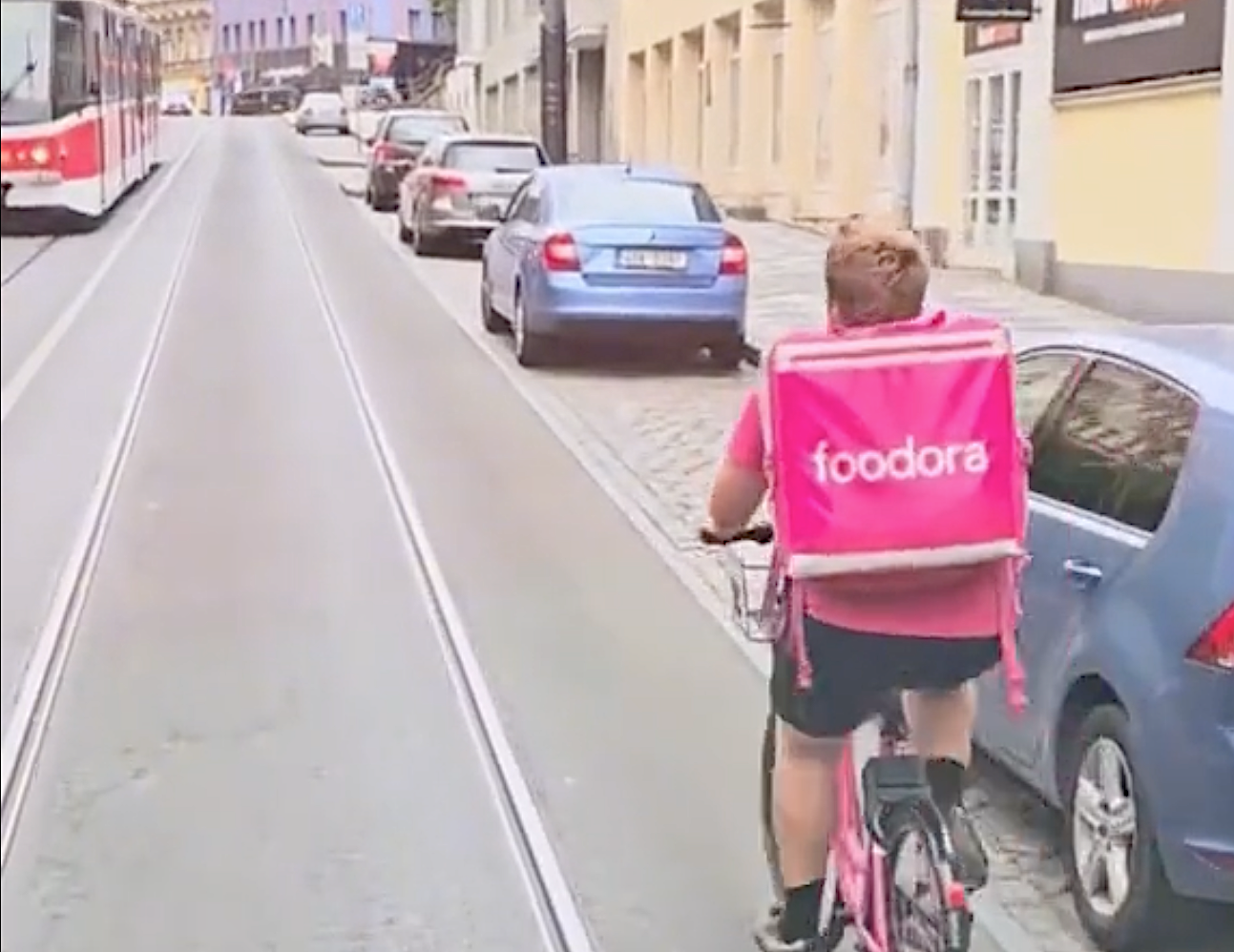
While we’re in Nusle, what do you think about Bělehradská Street? It recently became famous in a video where a courier on a bike rode in front of a tram while the tram driver aggressively rang his bell at him.
I have to admit that I missed that.
The cyclist could have yielded out of courtesy, but essentially, he was riding there legally. This is the design as created by the recent reconstruction of this link between Nusle and Vinohrady. It didn’t take cyclists into account. Are you considering allowing cycling on the sidewalk uphill? Riding uphill between tram tracks alongside parked cars is not pleasant and creates conflicts.
I certainly wouldn’t allow mixed movement of pedestrians and cyclists on the sidewalk in this area. In certain places, the sidewalks are wide enough. But then there are also places where they narrow down, and that wouldn’t be a good idea.
So, are you in favor of having bicycles ride within the tram tracks?
I don’t want to frame it this way – whether I prefer it or not. I’m talking about what is realistic.
Is Prague 2 planning to introduce 30 km/h zones in residential streets? These zones could then improve bicycle accessibility through counterflow lanes.
I support the idea that reduced-speed zones should be in place where they make sense and where they should alert drivers to reduce their speed. This means around kindergartens, schools, and similar places where there’s a high concentration of children and pedestrians who could be at risk from fast-moving traffic. Using these zone signs can often help eliminate unnecessary traffic signage.
Let me give you an example: if you have to reduce your speed to 30 km/h several times in a row because you know that there are children present, it’s better to have a 30 km/h zone throughout that street. However, I’m definitely not in favor of creating one large 30 km/h zone everywhere, as drivers might forget about the zone’s limits.
Currently, we’re dealing with a similar situation in Koperníkova Street, where we have a kindergarten. There’s traffic signage that reduces speed several times in a row. This is an example of where it’s better to have it along the entire length of the street. The same goes for Španělská Street around the kindergarten, at the Na Smetance primary school, and where a seniors‘ home will be built in the future.
Does this mean that entire blocks would be zoned?
No, quite the opposite.
So the speed limits would always be at the beginning of the street?
It’s always in the place where the driver should be alerted to reduce their speed because they are entering a specific area. If it were applied universally, drivers might forget about it, and it would lose its „warning“ character. I understand that some people may have different opinions on zonal measures, but at the moment, I support this direction, and I will advocate for it because it makes sense to me.
So, for the most part, Prague 2 plans to maintain the current maximum speed of 50 km/h in its streets?
If you look at the locations in Prague 2 where we have various speed reductions, you’ll find that there are many places where you can’t drive at more than 50 km/h. The speed has already been reduced in many places. Another factor is that the narrow streets and parked cars in residential areas visually reduce speed.
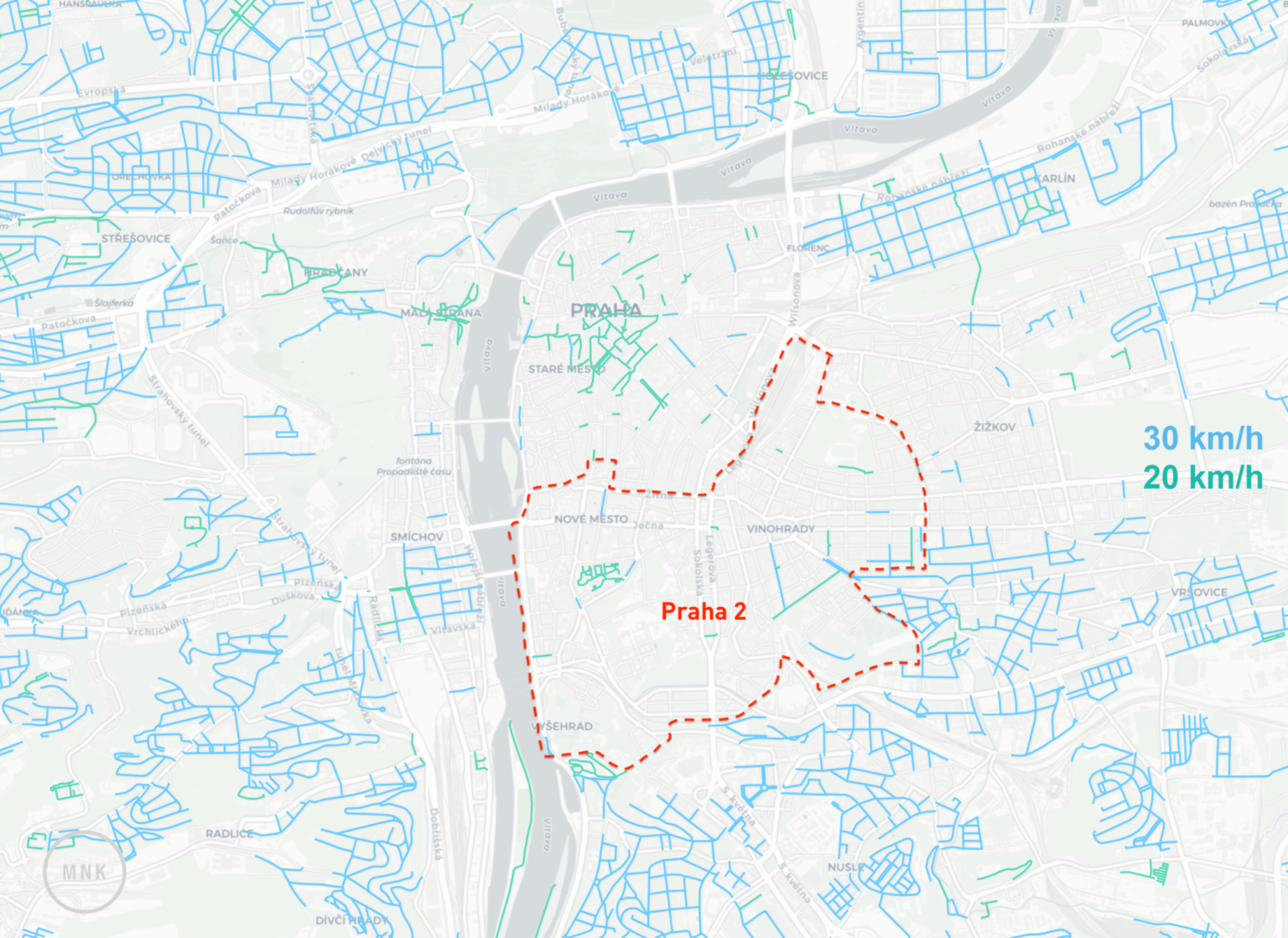
Here’s a map where you can see that Prague 2 lags far behind other city districts, which have already implemented 30 km/h zones in residential streets…
But not everything is there; it’s possible that the data isn’t 100% accurate. I can see, for example, that in Na Smetance Street, where we plan to increase the pre-school crosswalk, the current 20 km/h speed limit is not marked on the map. (This 35-meter segment with a reduced speed limit was later added to the map following a suggestion – Editor’s note.)
In any case, comprehensive counterflow lanes won’t be coming to Prague 2 because there are no plans for a comprehensive street calming project, correct?
That’s definitely not the case.
I’m interested in the Vítkov cycle path, which ends on the territory of Prague 2 near the Main Train Station. Your office refuses to legalize the connecting sidewalk so that cyclists don’t have to dismount at the end of the path. Are you planning to take any action on this?
I can’t imagine that in this location, where there’s a high concentration of pedestrians and a pictogram corridor is marked on the road.
But the pictogram corridor leads down the roadway, which is separated by about two meters of elevation and a railing.
Unfortunately, it’s not the best connection. Both Prague 3 and the city council historically allowed its cycling measures to lead into the area without connecting them to our cycle plan. For me, it’s not the most fortunate situation, but you can’t just create a cycle path and then wait to see what the other city district does.
At the moment, I don’t see any room for a shared sidewalk for pedestrians and cyclists there. As I mentioned, the sidewalk around the buildings near the Main Train Station is privately owned. The question is how the owner would react to allowing cycling there.
Are you referring to the sidewalk along Seifertova Street?
I mean the sidewalk that was created with the new underpass from the Main Train Station.
There are recently added bike racks there…
If there should be a route for cyclists, it’s up to the private owner, and we can’t impose anything there.
Our readers also asked about Rumunská Street and Náměstí Míru. Do you have any plans for addressing cycling in these areas?
The primary focus is to implement cycling measures as prescribed by our cycling plan. Náměstí Míru is, of course, included in this plan. At this moment, I can’t imagine combining cars into a single lane; it’s currently unfeasible. During the recent reconstruction, it caused traffic gridlocks.
In Rumunská Street, can you at least envision a bike lane on the uphill sections?
There’s currently a pictogram corridor in place. It’s mainly about completing it because some parts are missing.
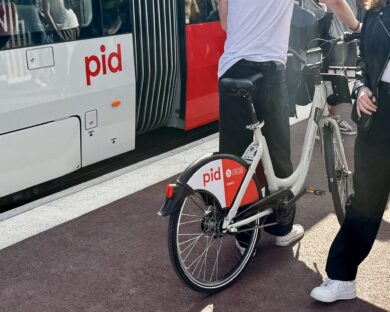
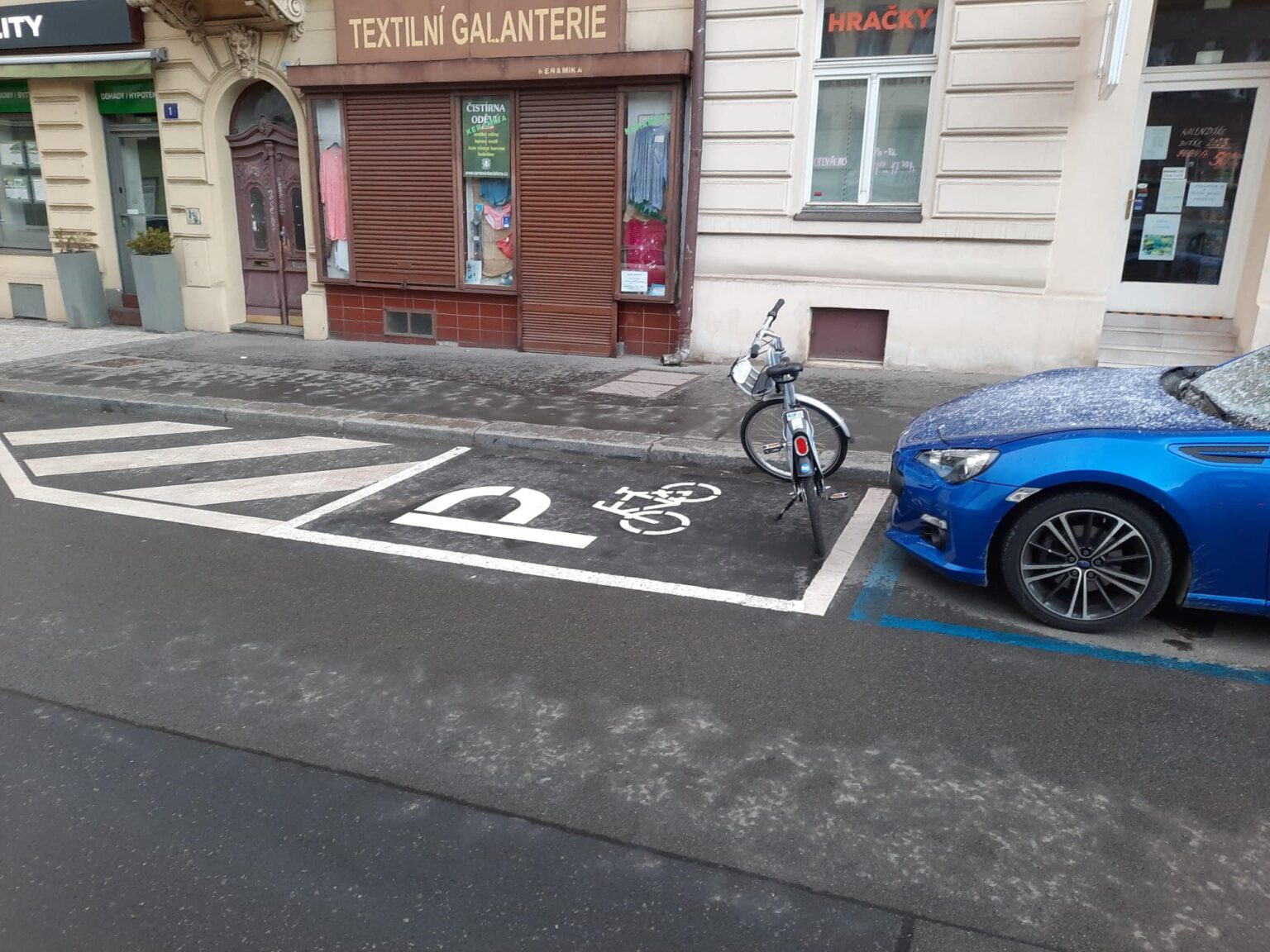
Prague 2 marks many parkings for bicycles and scooters directly on the roadway. In contrast to other city districts, bike racks should still be added there. When will this happen?
You probably know it wasn’t easy to negotiate with TSK (Technical Road Administration). I have fairly recent information that during this month (the interview took place in August 2023), preparations for a tender to purchase and produce so-called mobile bike racks are expected to begin. They won’t be permanently installed like traditional racks anchored in the ground; instead they will be screwed into the ground. If a specific location proves unsuitable for bike sharing or individual bike and scooter users, the rack can be relocated to another place where there is demand for it.
When will these racks be available in the streets?
We hope it will be as soon as possible; I am constantly reminding TSK of this. Bike-share users, which I consider a commercial service, predominantly use these spots and help regulate the chaos in the streets, which was more prevalent in the past. The problem is that sometimes cars are parked in these areas, which generally have no business being there. A bike rack is an elegant solution because it helps locals secure their bikes and simultaneously, as a permanent obstacle, prevents car parking.
Are you satisfied with the memorandum you signed with the bike-sharing companies?
Yes, but, of course, everything has its flaws that we have had to iron out. On the other hand, I must commend all bike-sharing companies for taking this on board, and it’s working. At the same time, I must highlight the work of the officials at the Prague 2 district office, who have also taken it upon themselves to enforce the rules. Every day, a group of about ten people goes out to inspect proper parking using an application we had created for reporting improperly parked bikes and scooters. If they find a scooter that is parked incorrectly, they photograph it, upload the QR code, and the operator receives a message that it needs to be relocated. Operators usually complete the task within the specified time frame and remove the scooter. Over the summer months this year, we reported 5800 bikes and scooters in this way, of which we had to have 116 towed because the operators couldn’t fix the offense within the time limit. In 98 percent of the cases, it works.
I, too, walk and report improper parking, and I try to cover weekends in this way.
I noticed that as part of the memorandum, you demand fairly detailed information about operations from operators. How do you use this information?
One of the interesting pieces of information for us is that bike users don’t use uphill rides very much; they don’t ride from Podskalí and New Town towards Vinohrady. This is more the domain of e-scooters, which have a larger presence in these higher areas.
I also want to ask about Vinohradská Street, where, according to IPR, reconstruction was planned. In the end, only the tram track was repaired, and the rest of the street is almost the same as before. Do you have any information about this?
We discussed this during a meeting that focused on tram stops, where passage for cyclists behind the stop (known as a „Viennese cycle path“) was proposed. To prevent pedestrians from colliding with cyclists, which would happen when getting off the tram, certain pedestrian paths were considered non-traversable. It was said that the designer would rework this to prevent collision situations, and the revised proposal would then be sent for consultation. Since then, there has been no further progress.
What construction or change will have the most positive impact on pedestrian and cycling transportation during your term?
I hope that we can quickly resolve Sekaninová Street with the city council. At least with temporary measures that would increase parking capacity and enhance safety. By changing parking from parallel to diagonal, we can raise the curb heights at pedestrian crossings to narrow the road profile. This would shorten pedestrian crossings and improve safety.
What, in your opinion, would have the most positive impact on pedestrian transport?
I think that would have the most positive impact on pedestrian transport because there is a high volume of pedestrians from Folimanka Park in that area. Furthermore, we’re planning, in collaboration with Prague City Hall, to add traffic lights to the combined pedestrian and cyclist crossing at Na Slupi Street. This will make pedestrian crossings and cyclist crossings safer. This is important because many children cross there to get to school. Currently, this is monitored by city wardens.
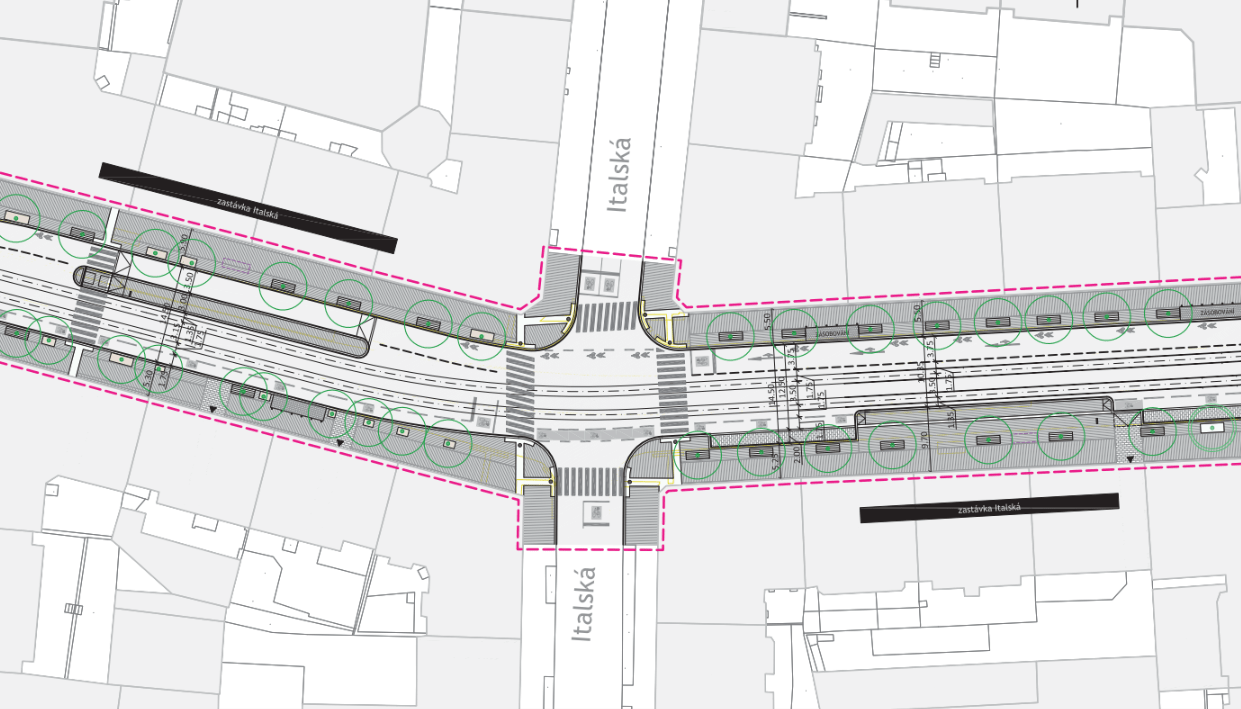
Additionally, under BESIP measures, we’re developing an island for pedestrians in Italská Street. This project is already two to three years old. Furthermore, we plan to modify the area in front of the Na Smetance Elementary School under the BESIP program, which includes reducing the speed limit in the area.
Do you plan any specific changes for cycling?
We will try to ensure that bike lanes are implemented.
Do you think these will be completed before the elections?
I firmly believe so.
And which foreign city serves as an inspiration for you?
Even though it doesn’t compare in size, I admire Ljubljana, not only for its infrastructure. It has a well-developed network of bike parking and electric vehicle charging stations. While it lacks a subway or tram network, its bus transportation is well-implemented.
Another city that serves as a comparable model is Vienna. Not in all aspects, though. It should be noted that it’s quite over-signaled.
Prague is also over-signaled…
Yes, Prague is indeed over-signaled in many places. However, in Prague 2, we’re working to minimize excessive signage. It often frustrates me when a construction contractor arrives during road reconstruction and places countless signs. We make efforts to reduce the number of signs in our area. The more signs there are, the more chaos they create.
So, in what way is Vienna an inspiration?
I can’t say it’s necessarily related to cycling infrastructure, as Vienna has wider boulevards and more public space than we do in Prague. Vienna is much more accommodating in terms of public space. Another aspect is that Vienna’s terrain isn’t as hilly as Prague’s. To put it simply, Vienna is flatter. However, I wouldn’t say it applies everywhere, as Prague has its unique challenges.
Is Vienna an example in terms of 30 km/h zones, where they have implemented contraflow bike lanes on a large scale?
I mentioned that it’s not an all-encompassing example.
Do you use a bike in the city or outside the city?
I often use a bike for transportation outside the city. Inside the city, I sometimes use a bike, but it’s not very common. I walk a lot and try to use public transport. When I go outside the city, I often bring my bike with me for recreational purposes.
Do you follow the „Městem na kole“ magazine?
I hadn’t followed it before you contacted me, and your media outlet was unknown to me. Then I read some interviews with fellow councilors who answered your questions. And of course, I read some other articles on your platform.
Thank you for the interview.
Thank you as well.
This is an adjusted ChatGPT translation of this article: https://mestemnakole.cz/2023/10/co-chystaji-mestske-casti-praha-2-2/
Líbil se Vám článek? Chcete v Česku lepší podmínky pro cyklodopravu?
Podpořte nás, stačí i 100 korun. 💙🚲
Vyberte prosím částku, poté budete přesmerováni na darujme.cz