
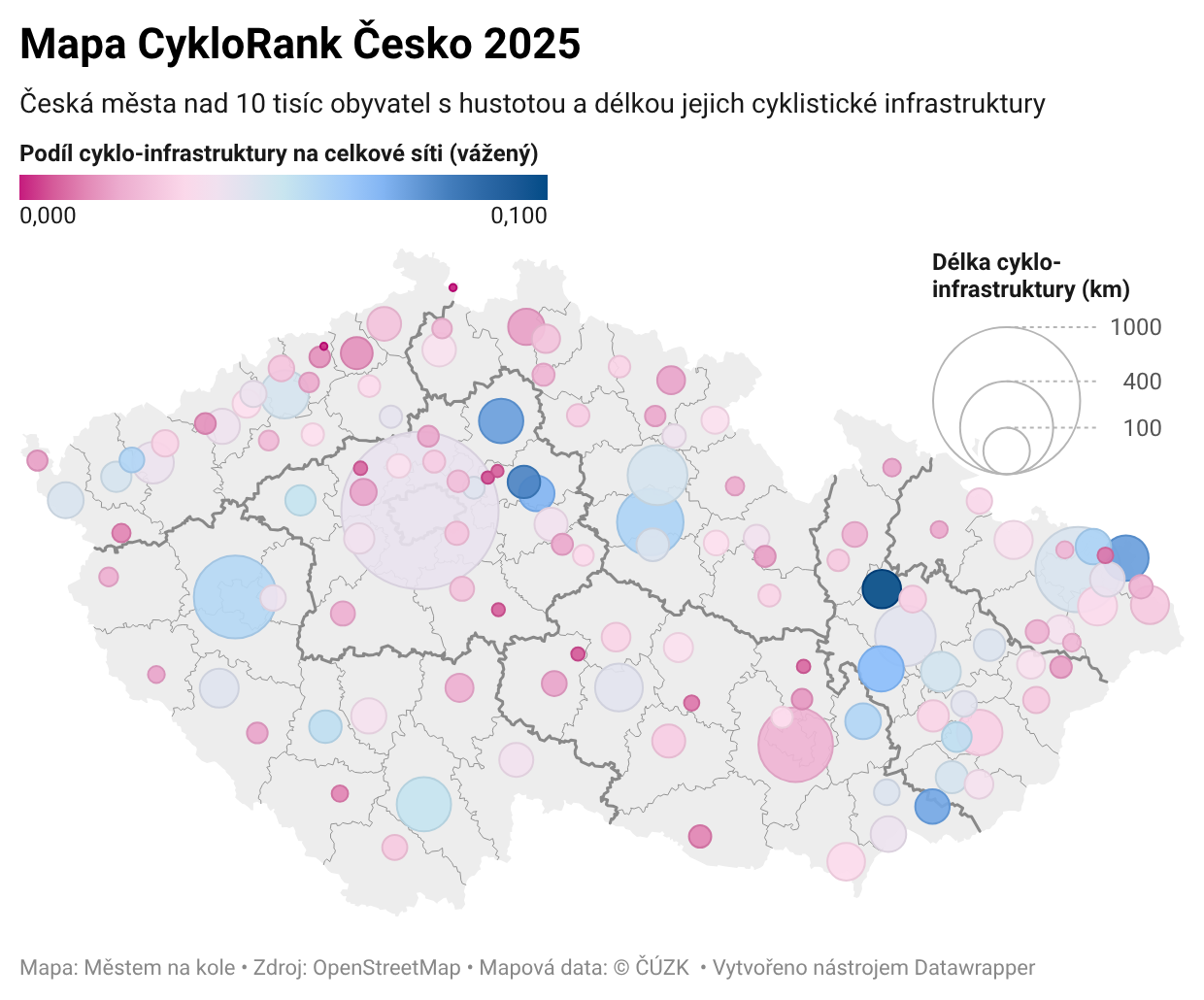
The results of the third annual CykloRank Czechia rankings are here, presented by Městem na kole in cooperation with the association Plzeň na kole and the Do práce na kole (Bike to Work) challenge. The ranking compares Czech cities based on the amount of their cycling infrastructure. A total of 128 Czech cities with more than 10,000 inhabitants are ranked based on the quantity of cycle paths, cycle lanes, bike racks, and counter-flow cycling streets.
For the third year, the ranking shows how cycling infrastructure is evolving across Czech cities—which cities have the most lanes and paths, and which are lagging behind. Since 2023, when the first CykloRank was released, many cities have made changes that have improved the quality of their cycling infrastructure.
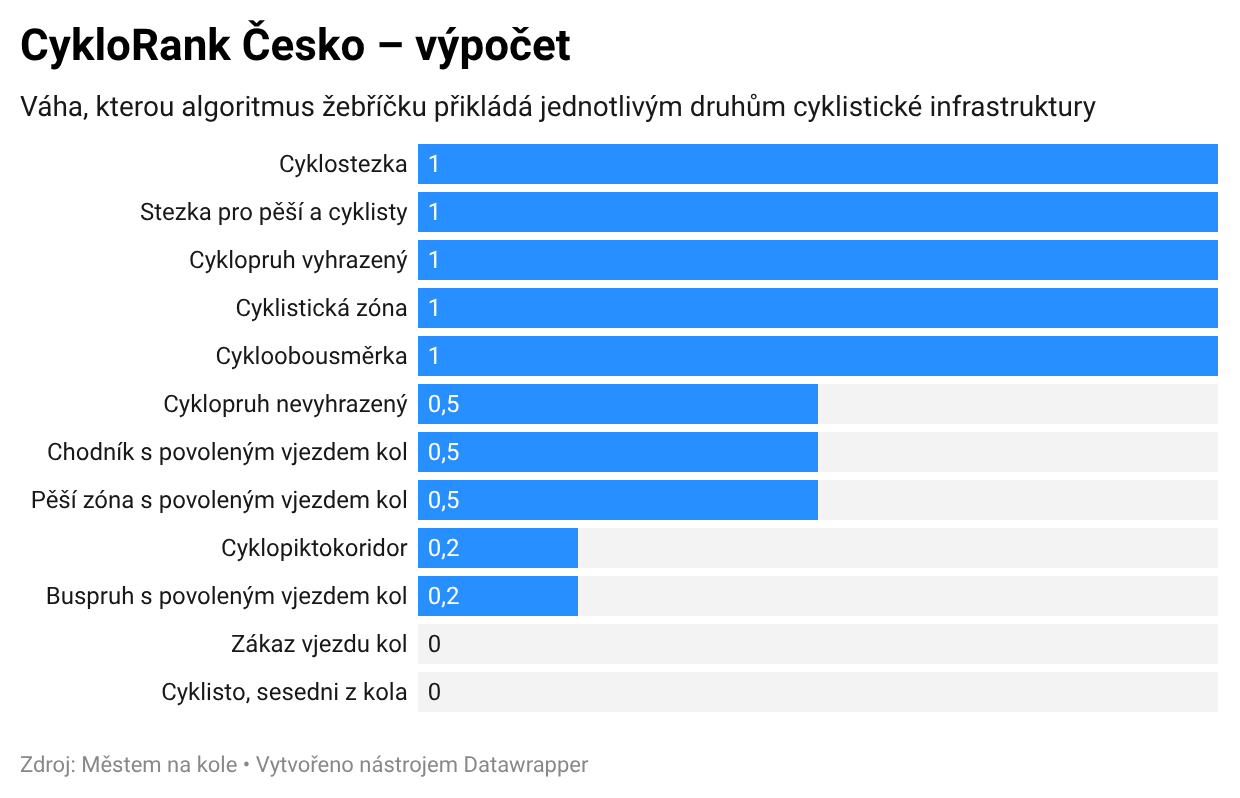
The ranking is based on an algorithm inspired by Estonian research, awarding the most points for safe infrastructure—specifically cycle paths separated from motor traffic. Cities also earn points for dedicated and non-dedicated cycle lanes, bike racks, counter-flow cycling, and pedestrian zones where cycling is permitted. Bus lanes with permitted cycling or pictogram corridors are included with lower weighting. The data comes from OpenStreetMap, which serves as the basis for the Městem na kole map and is regularly updated by our editorial team.
The CykloRank is also used to help determine the ‚Cycling City of the Year‘ title, awarded by the AutoMat association as part of the Bike to Work challenge.
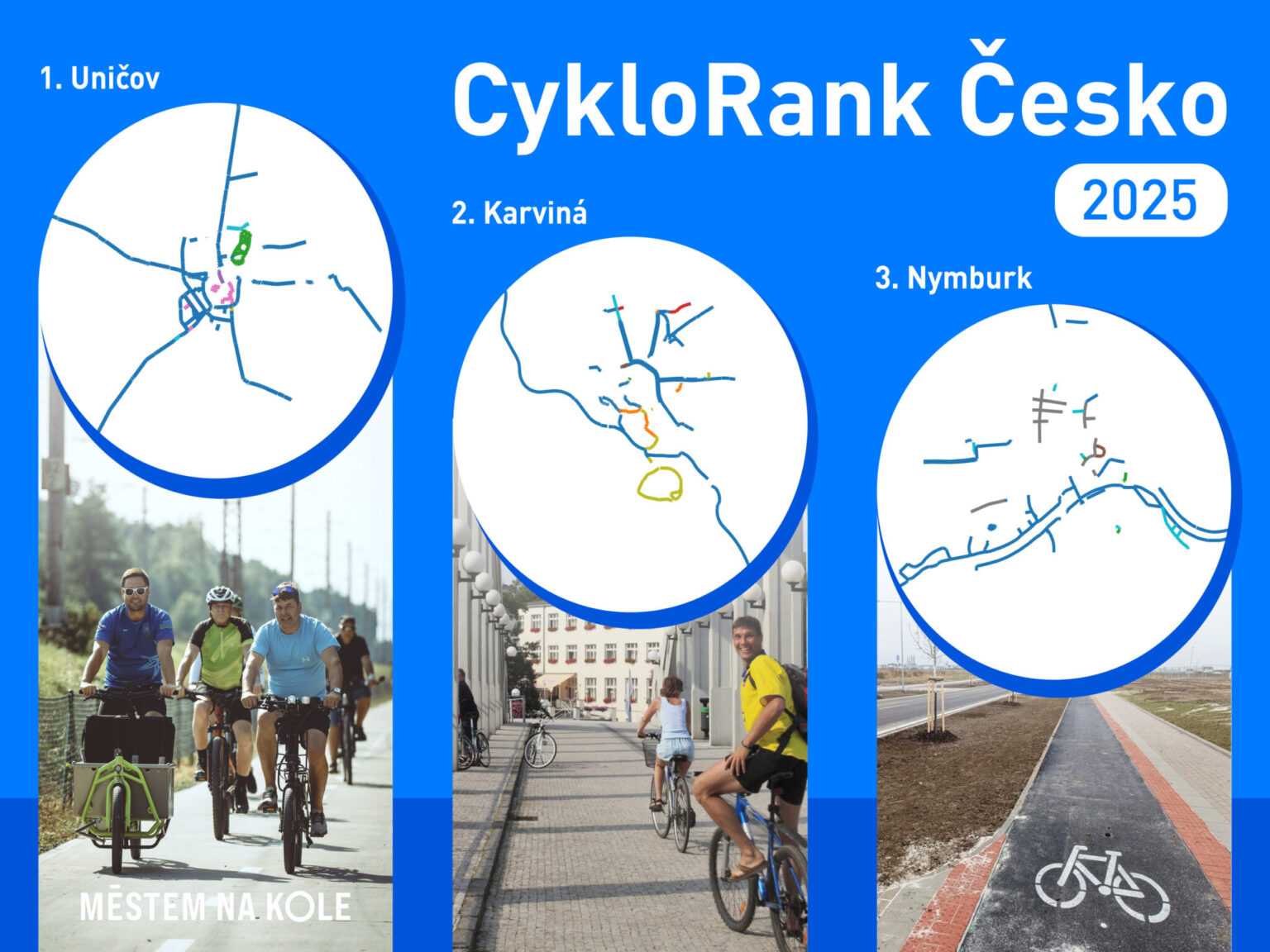
Uničov in the Olomouc Region maintained first place again this year, defending its position as the cycling leader for the third time in a row. Compared to last year, six kilometers of cycling infrastructure were added, bringing the total network length to approximately 58 kilometers and further increasing the share of cycling infrastructure within the city’s street network. Karviná took second place this year, following up on last year’s success and remaining on the podium. The city added roughly nine kilometers of new infrastructure.
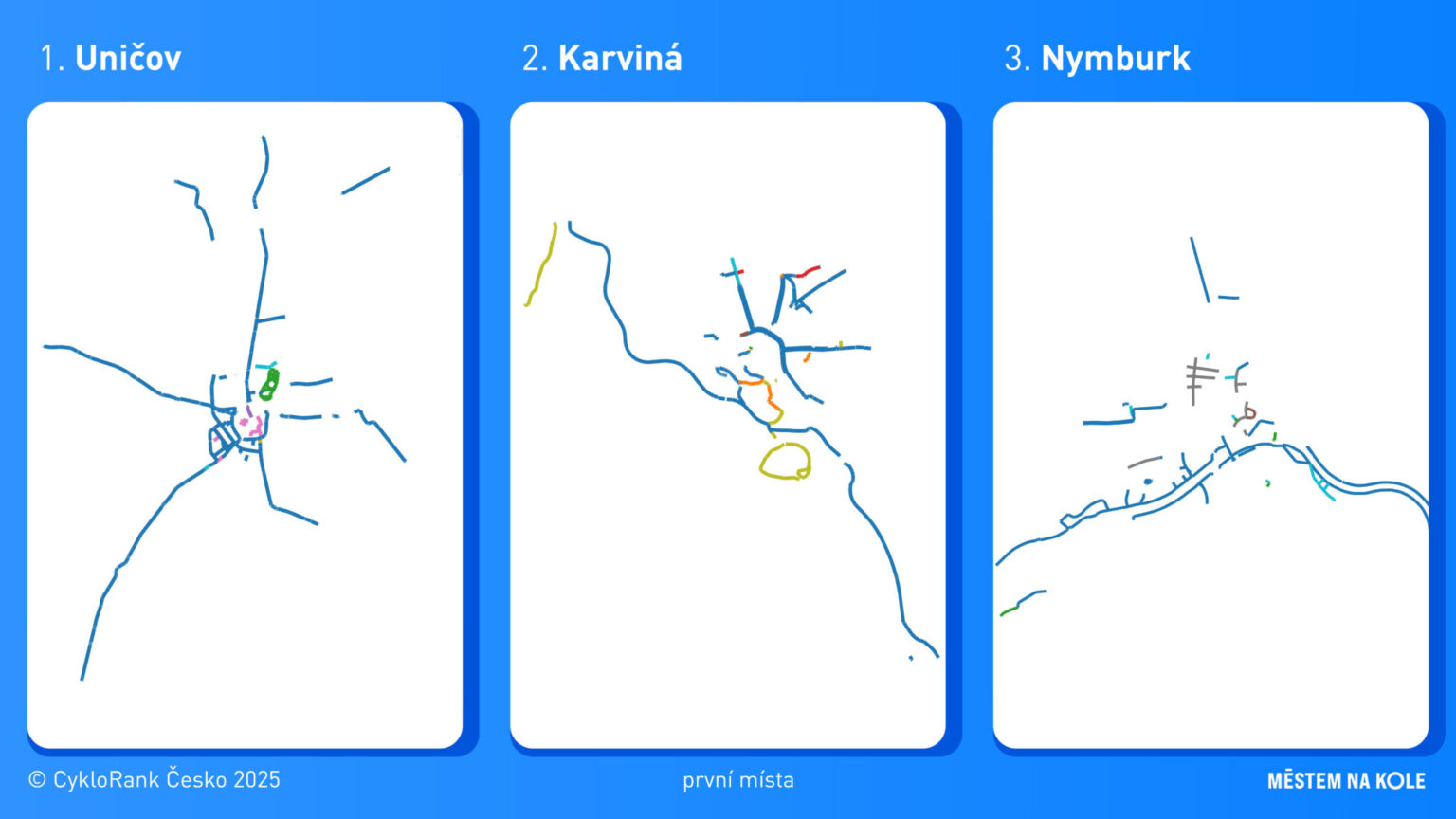
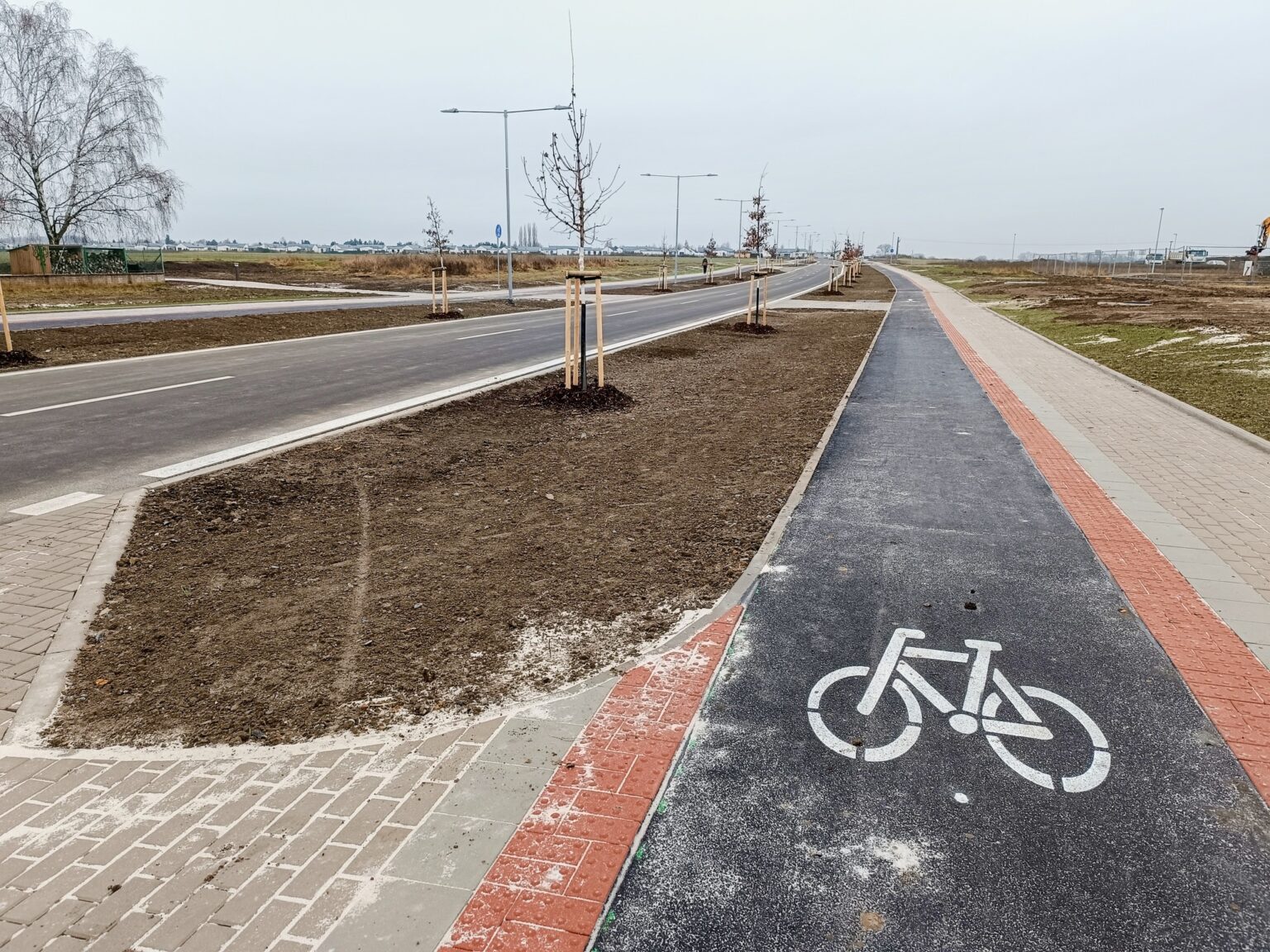
Third place is now occupied by Nymburk, which is one of this year’s biggest jumps. Compared to last year, approximately seven kilometers of cycling infrastructure were added, and the city impressed with the quality of new projects, such as streets with high-standard separated cycle tracks. Nymburk has been improving long-term—in 2023 it was 23rd, in 2024 it was 6th, and this year it reached the symbolic podium for the first time.
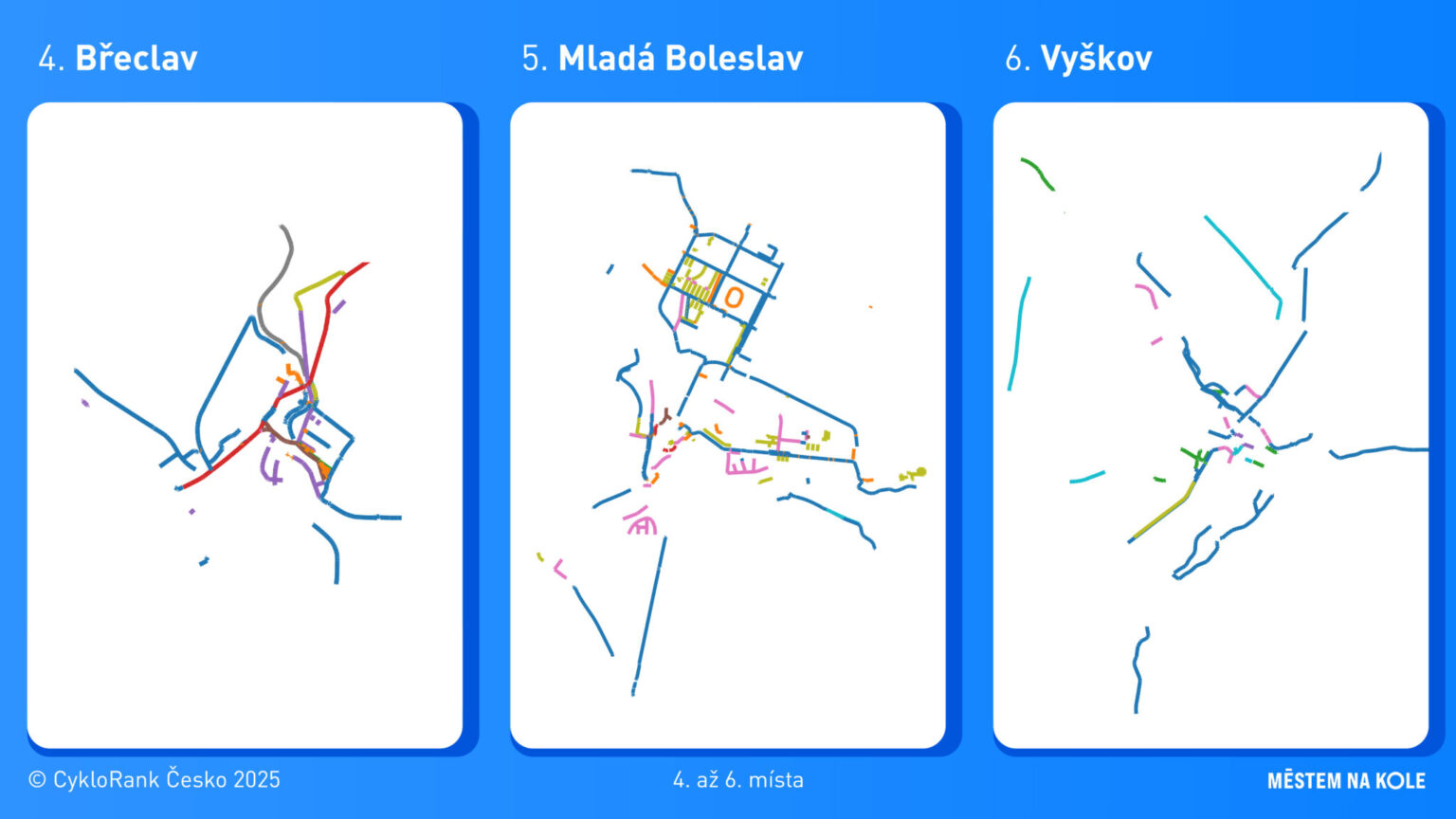
Břeclav finished just below the podium, overtaken this year by Nymburk. Fifth place went to Mladá Boleslav, moving up from last year’s eighth place, and sixth is Vyškov, which saw a significant jump from 14th place last year.
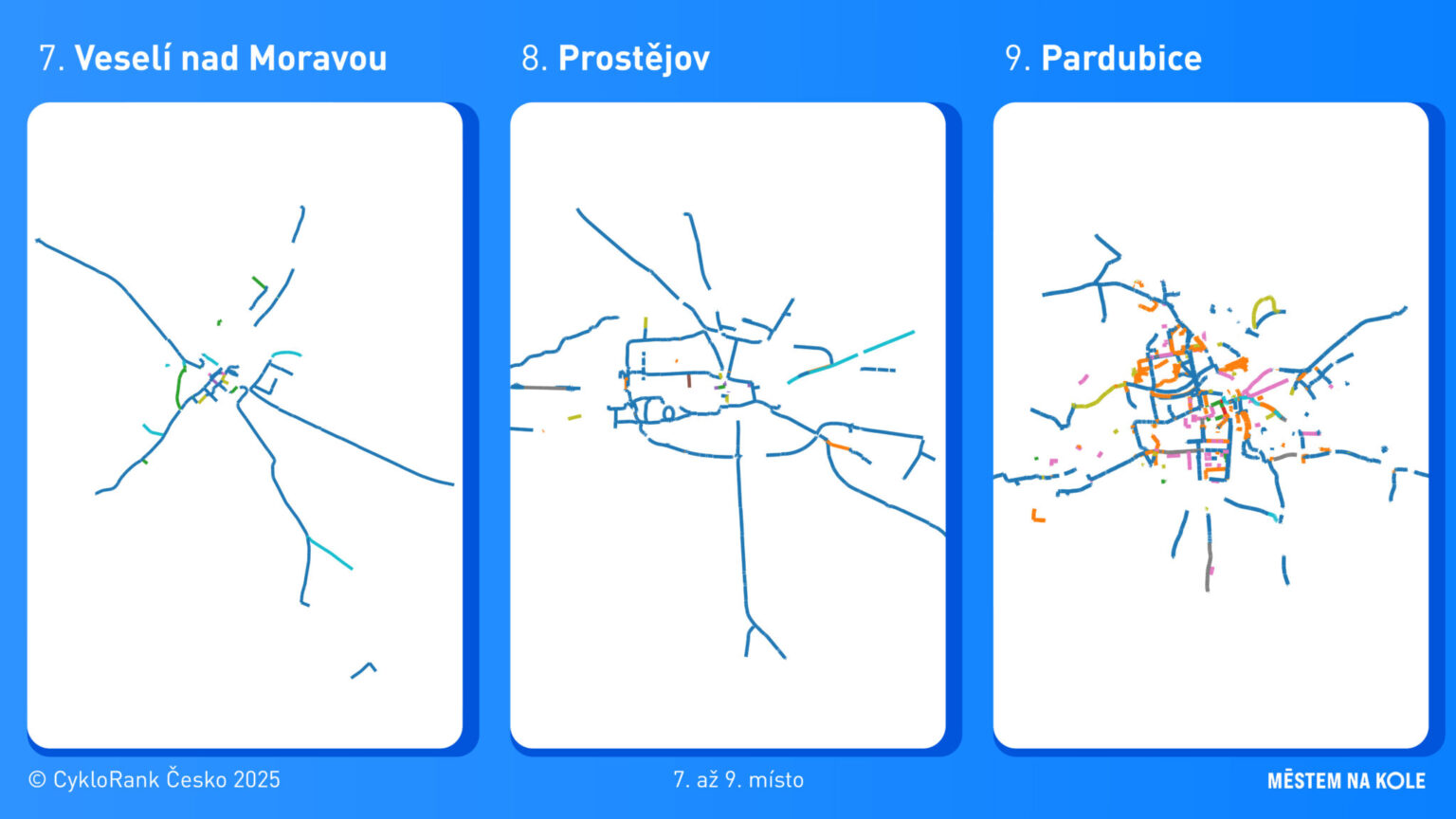
Seventh place belongs to Veselí nad Moravou, which dropped slightly from fourth last year. Prostějov finished eighth, improving compared to the previous year. The top ten is rounded out by Pardubice and Hradec Králové, which were in second and third place in the first year of CykloRank. For both of these cities, while cycling infrastructure continues to grow, they are being overtaken in relative comparison by smaller cities that are building networks faster and with greater density. This has proven to be a key long-term factor in CykloRank.
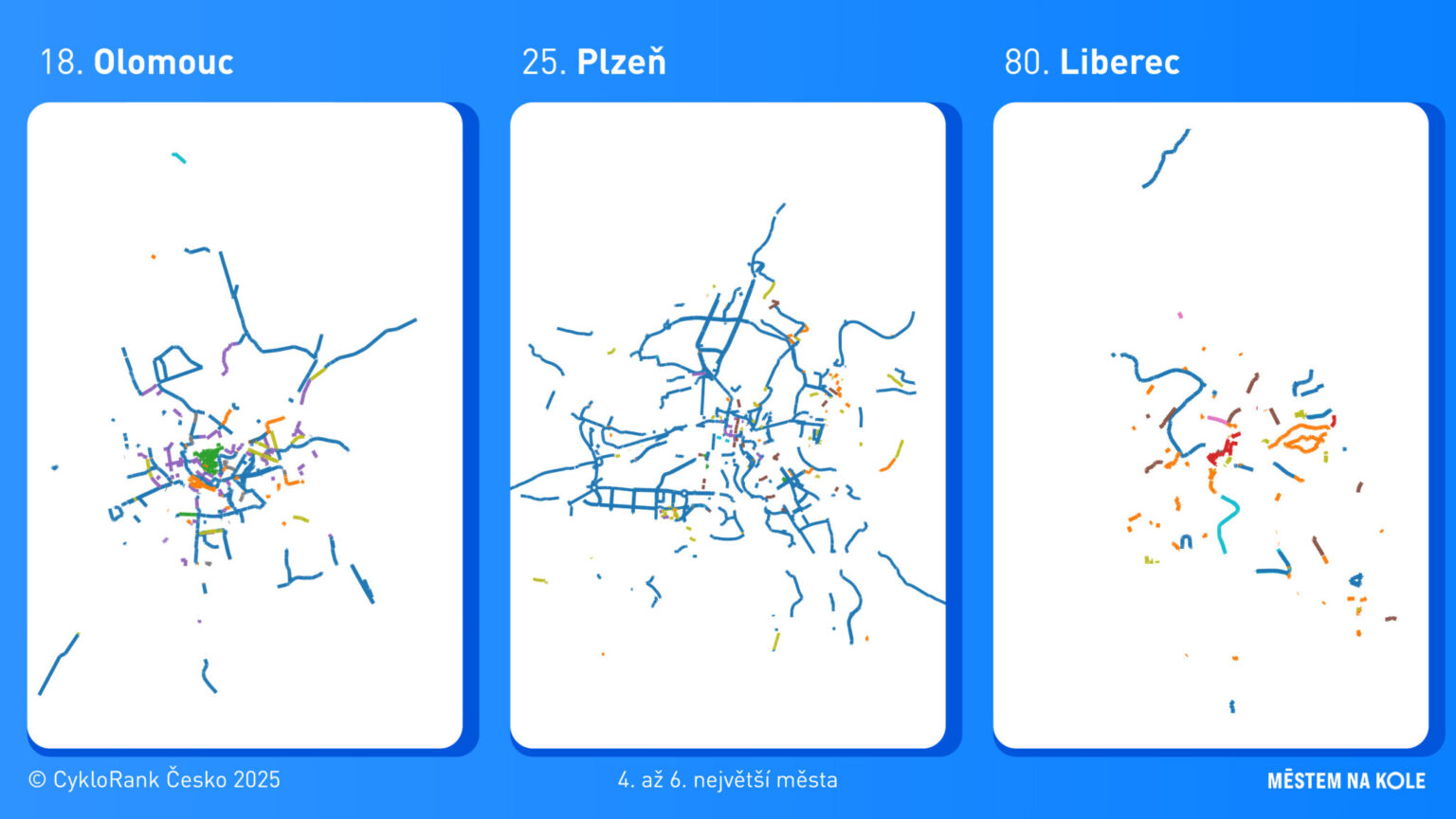
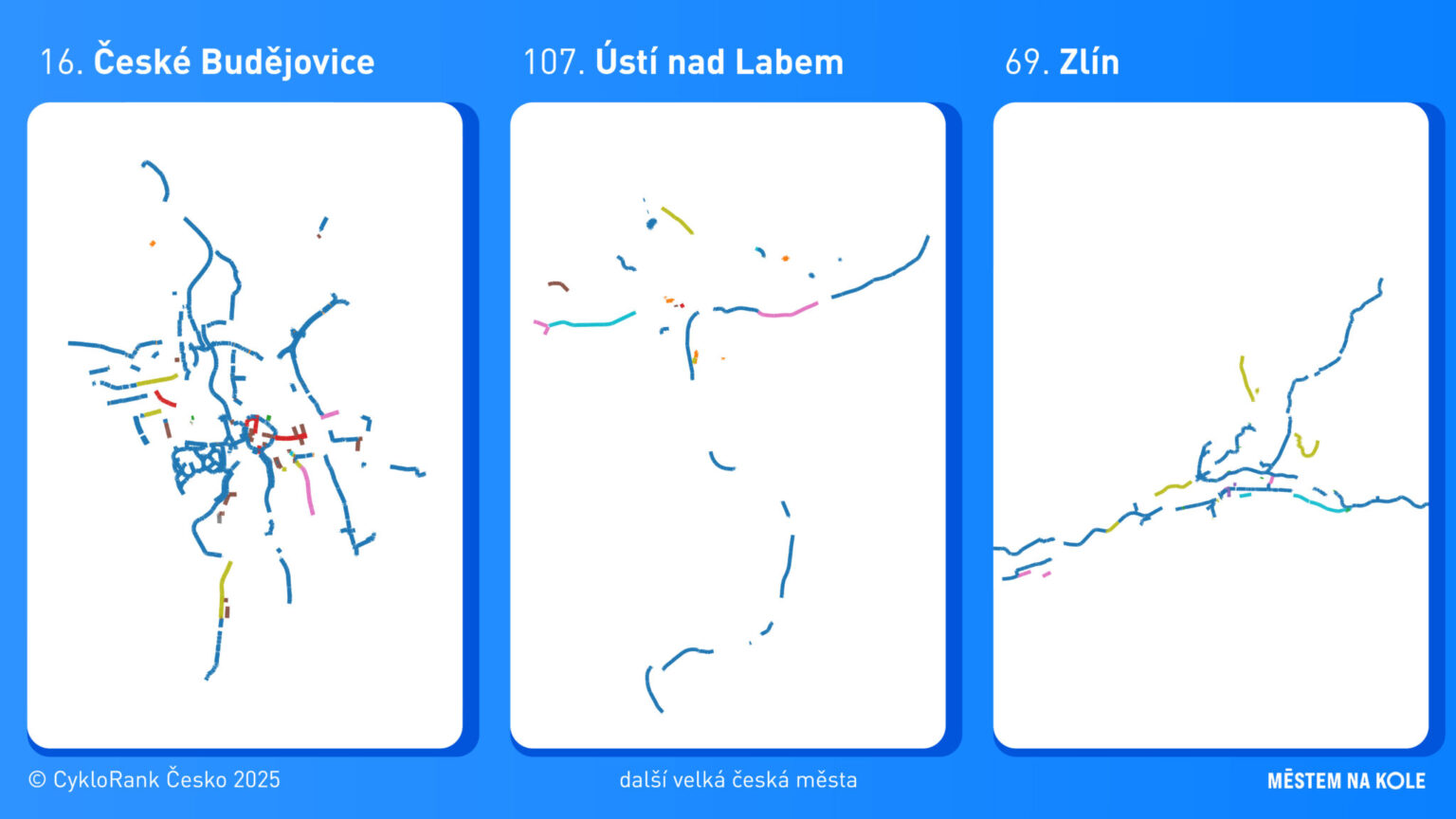
Among cities with over 100,000 inhabitants, České Budějovice fared best in 2025, placing 16th. Olomouc dropped from 13th last year to 18th, though it remains one of the best-rated large cities. Pilsen finished in 25th place.
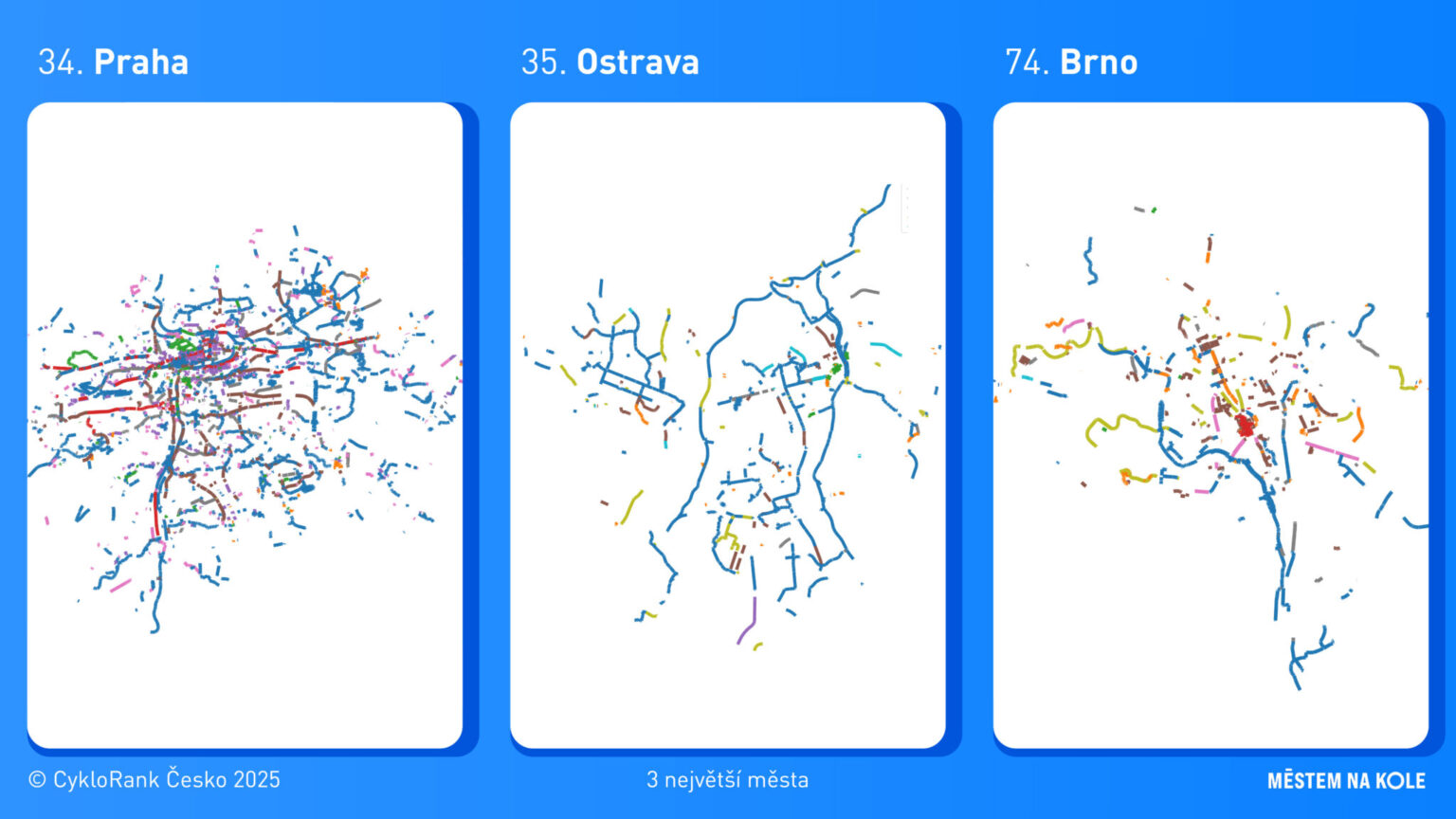
Prague improved by one spot compared to last year, moving from 36th to 35th. Although it has the longest cycling network in Czechia in absolute numbers (1,144 km), its development remains rather gradual in proportion to the scale of the city and its street network. Ostrava is in a similar position, moving from 37th to 35th place, situated just behind Prague.
Brno saw a more significant improvement, primarily due to the expansion of counter-flow cycling streets. The city moved from 81st to 74th place, though it still remains deep in the second half of the ranking. Liberec improved by two places to 80th. Ústí nad Labem is the worst-rated large city, falling to 107th place out of 128.
Last year, readers wrote in asking for the inclusion of the 128th Czech city with over 10,000 inhabitants: Lysá nad Labem. As of January 1, 2025, Lysá has 10,004 inhabitants and so it has now entered the ranking. However, the result for this town on the Elbe was not impressive. With its 4 kilometers of cycling infrastructure, it ranked among the last cities in 123rd place.
This year’s CykloRank results confirm once again that cycling infrastructure is growing in a portion of Czech cities. For the third year in a row, Uničov reigns supreme, holding first place by a wide margin. Unless something fundamental changes, it is unlikely any other city will overtake it in the near future.
Looking at the other positions is more interesting, especially behind third place. This is where significant year-on-year shifts and changes occur, showing that many cities are systematically working on cycling infrastructure. A long-term trend is also that small and medium-sized cities are gradually catching up—and often overtaking—large cities like Hradec Králové, Pardubice, or Olomouc. While the latter possess extensive networks in absolute numbers, their development relative to the city’s size is slower and often more difficult.
It should also be added that CykloRank does not only capture newly built infrastructure from the past year. Part of the changes in ranking is due to gradually improving mapping in OpenStreetMap, especially for cities that had not high-quality mapping in the early years. This is one reason why this year’s results are more accurate and better reflect reality.
Furthermore, one of the motivations for creating the ranking was the pressure to improve map data for cycling. We are pleased that thanks to CykloRank, cycling maps and navigation in Czechia are becoming increasingly accurate and detailed.
Congratulations are due to the winners and the cities in the top ten. In the Czech context, these are cities actively addressing cycling transport and developing their networks long-term. At the same time, numbers alone never tell the whole story. Just as important as the length of the infrastructure is its quality, connectivity, and usability in daily traffic.
That is why it makes sense to look at the map outputs alongside the tables, which show what the cycling network in individual cities actually looks like. These often reveal more than the ranking itself. If you are interested in a specific city and its map within CykloRank, you can find it here. If you would like to receive it in the official graphic template, please write to us.
The CykloRank is, of course, not a perfect tool. We are aware that the quantity of infrastructure does not automatically mean quality or safety. However, in terms of available data and the scope of the territory monitored, it is the most accurate comparison we have in Czechia today. For those interested in details, a separate page dedicated to CykloRank [in Czech – eds.] is now available, explaining the methodology, data processing, and the limitations of the entire evaluation.

This is an adjusted machine translation using Gemini of this article: https://mestemnakole.cz/2026/03/cyklorank-cesko-2025-top-mesta-pro-cyklisty/
Líbil se Vám článek? Chcete v Česku lepší podmínky pro cyklodopravu?
Podpořte nás, stačí i 100 korun. 💙🚲
Vyberte prosím částku, poté budete přesmerováni na darujme.cz


komentář