

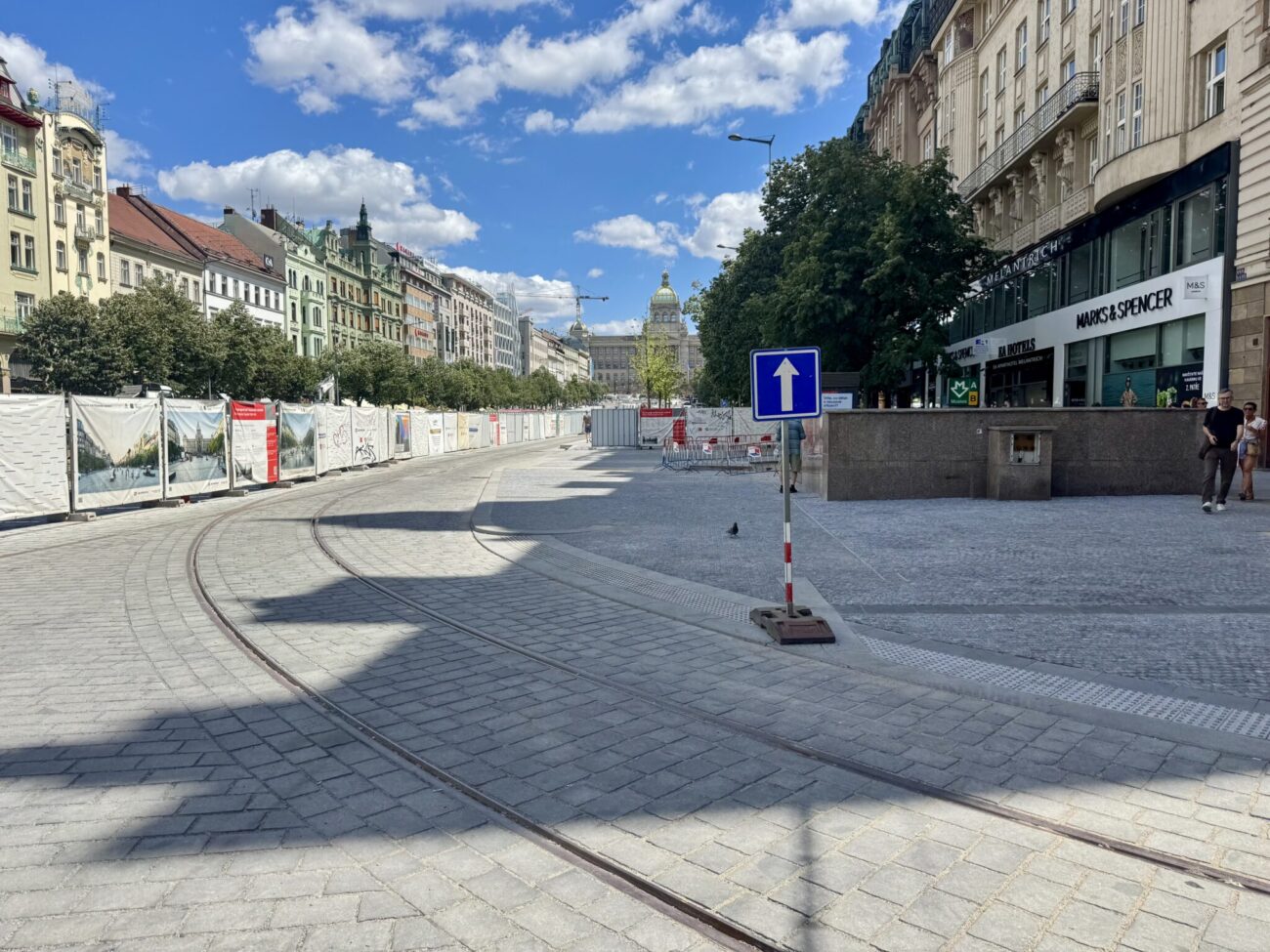
The first small section of the reconstructed upper part of Wenceslas Square has opened, promising a higher-quality public space and a new tram line. This first completed stretch also offers a glimpse of the future sidewalk bike path. Unfortunately, it suggests that the pursuit of minimalist design has gone a step too far.
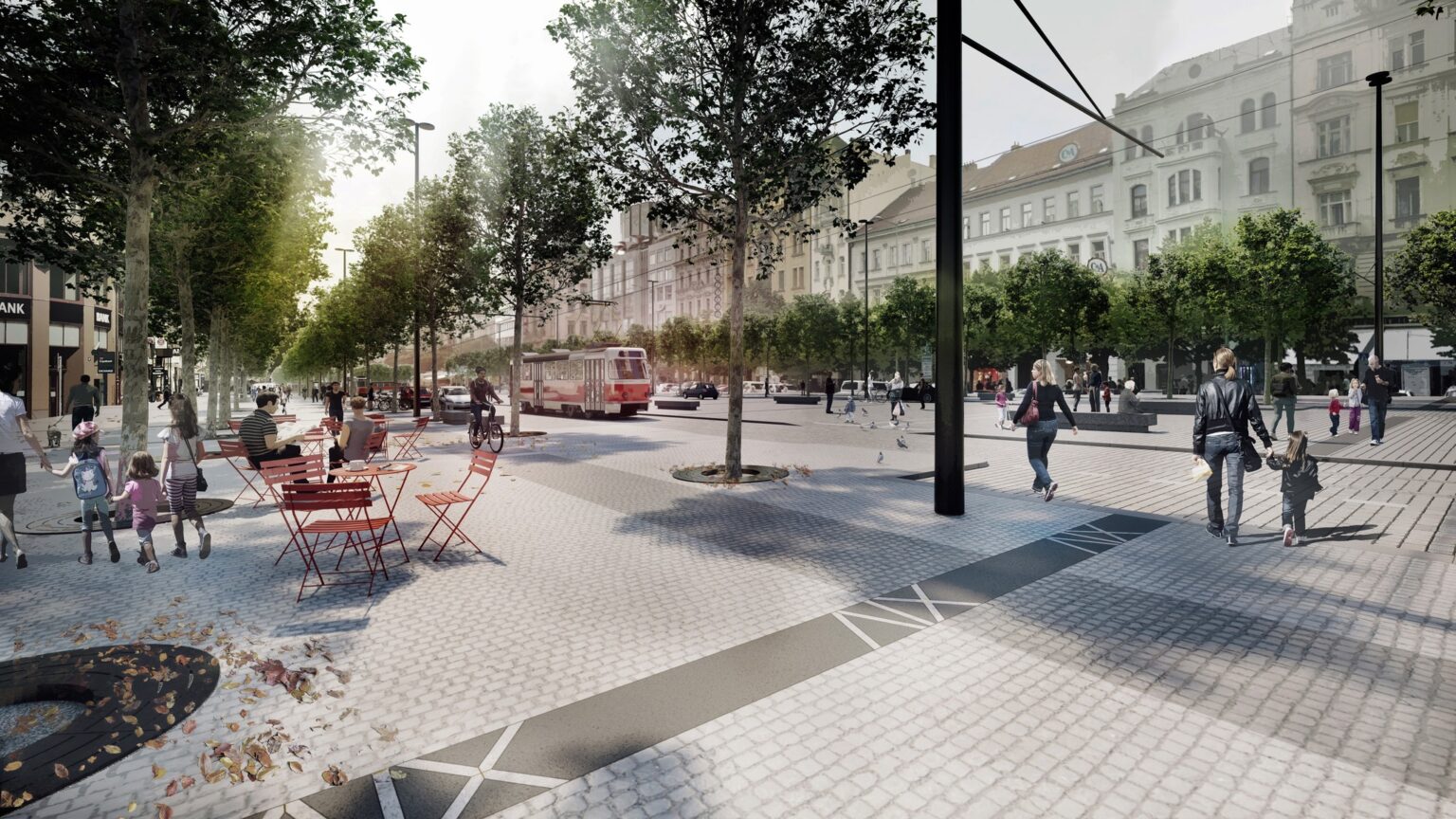
On the blueprints, the bike path within the sidewalk is quite clearly distinct. In the visualizations, it is set apart by a different shade of paving stones and accompanied by bicycle pictograms.
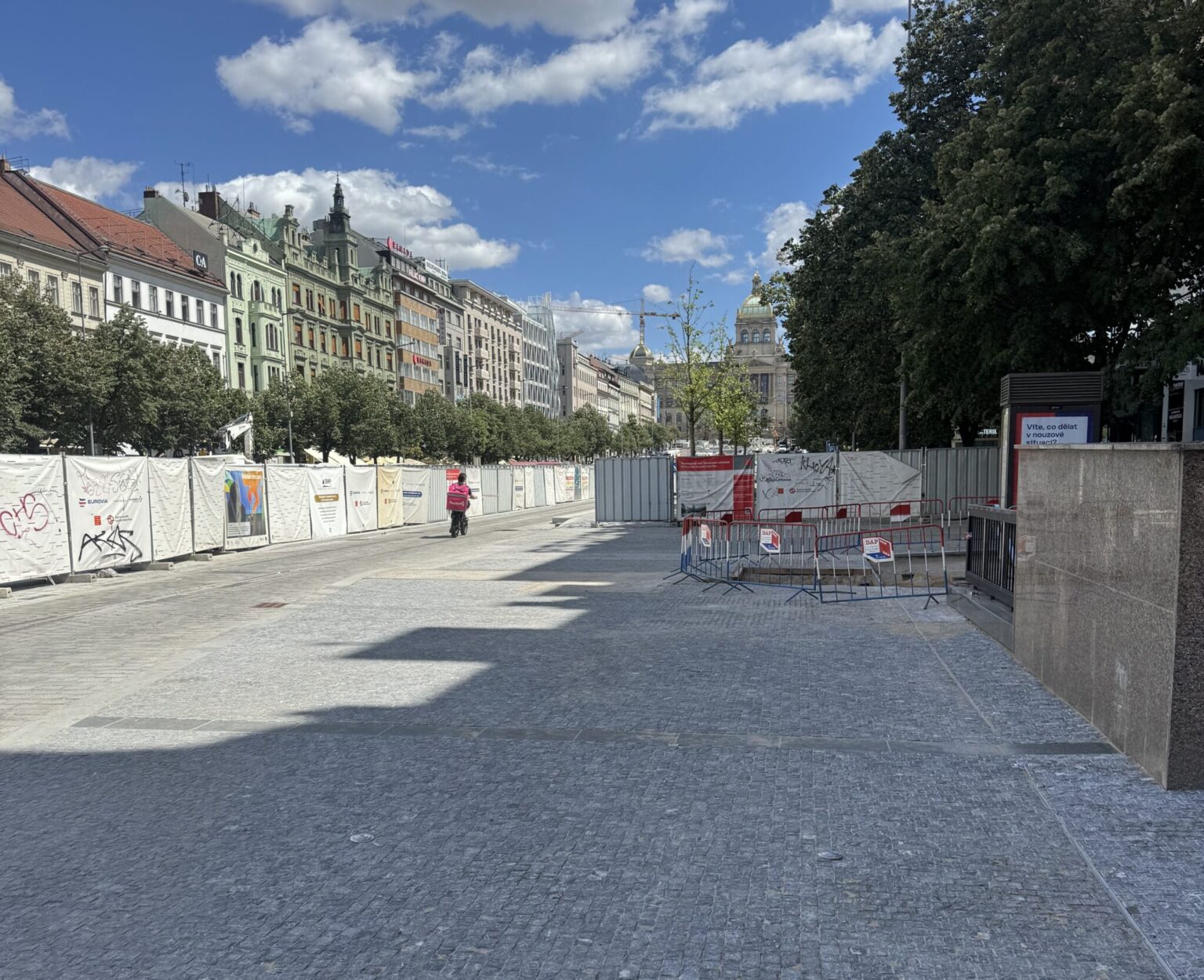
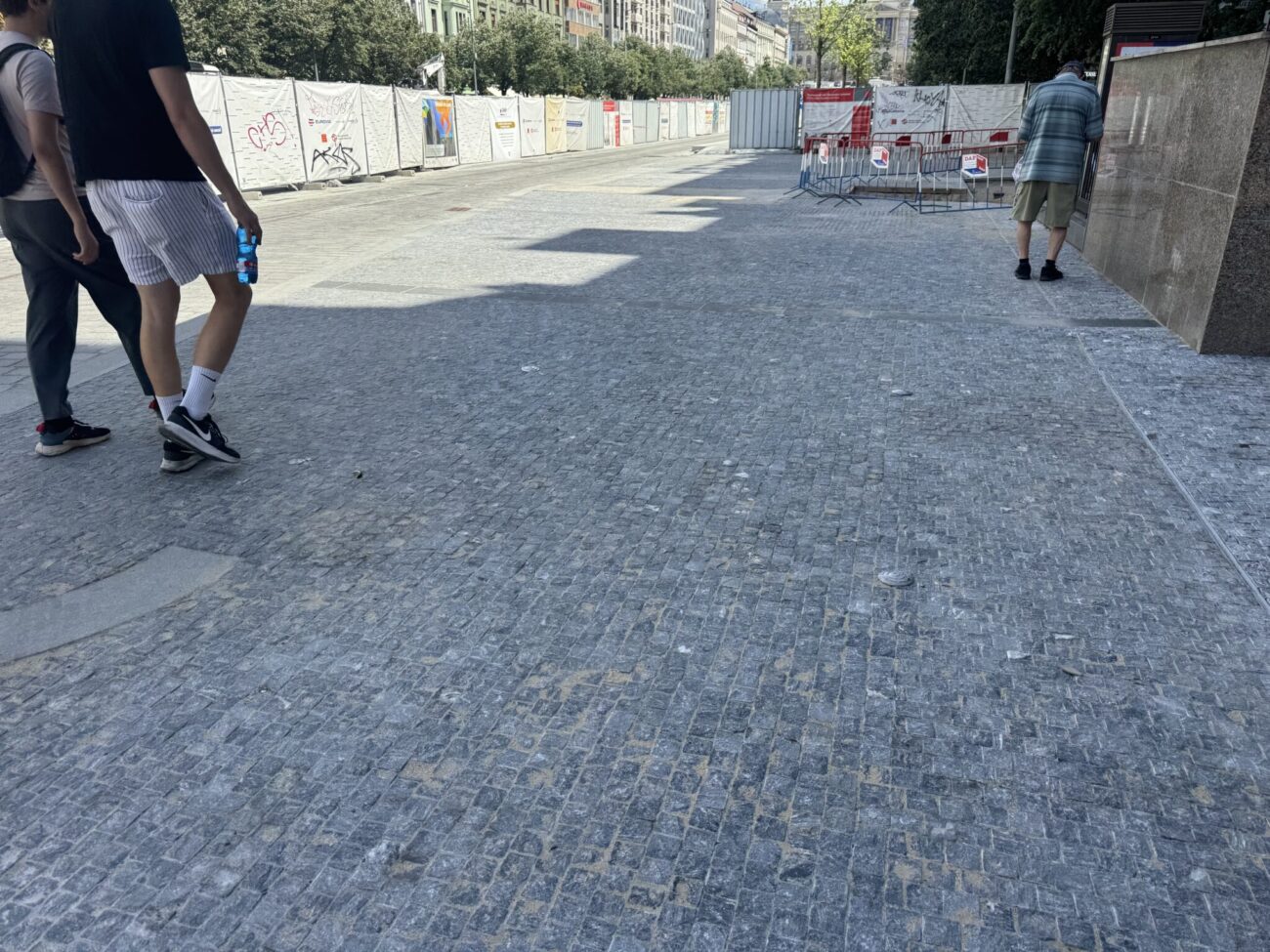
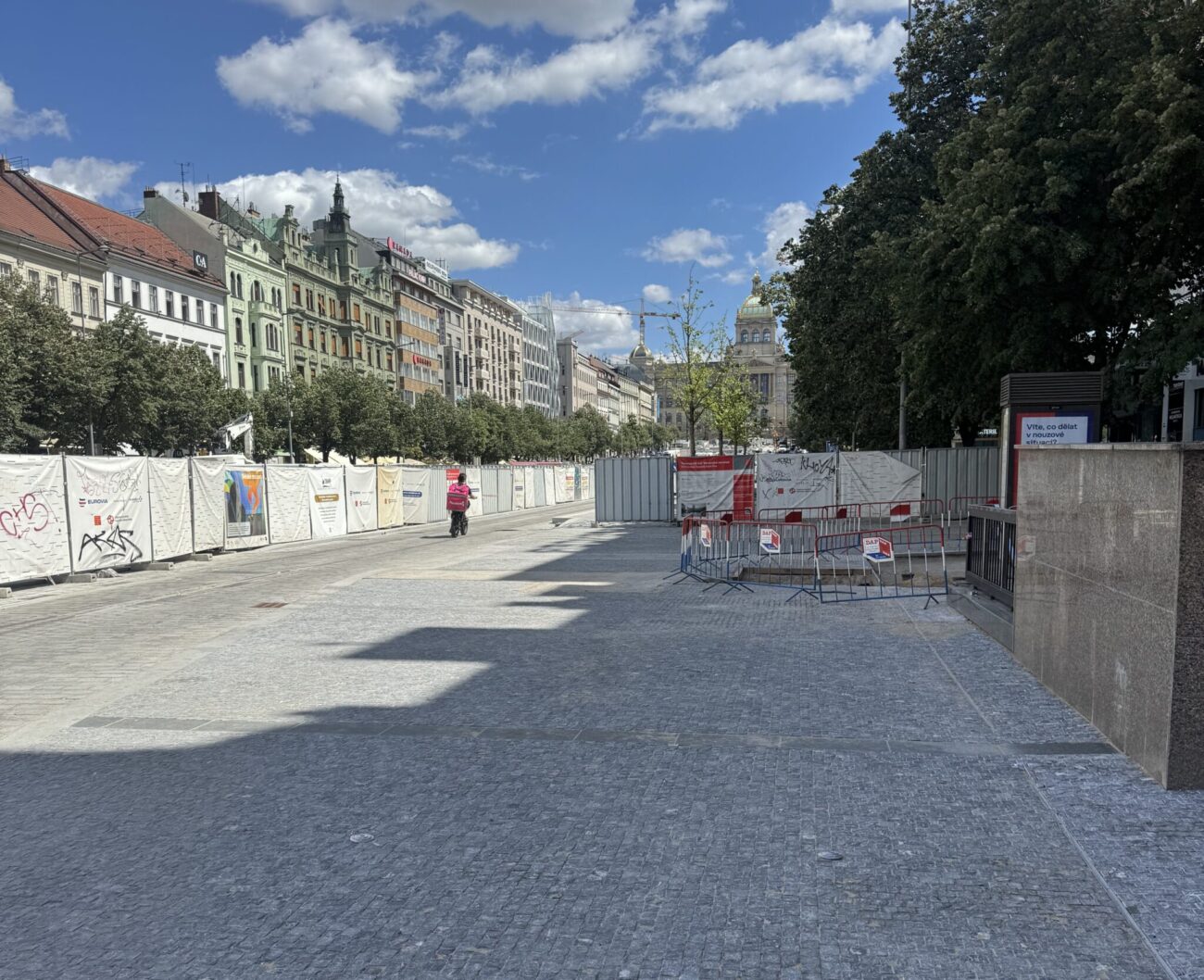
In reality, however, it is almost invisible. It consists of the exact same grey mosaic pattern as the rest of the sidewalk, separated from its surroundings only by a slightly different grout line between the stones. It is so subtle that someone without prior knowledge of the project stands virtually no chance of noticing it.
Honestly—if I hadn’t known the project beforehand, it would never have crossed my mind that I was looking at cycling infrastructure. And I actually specialize in architecture and bicycle transit.
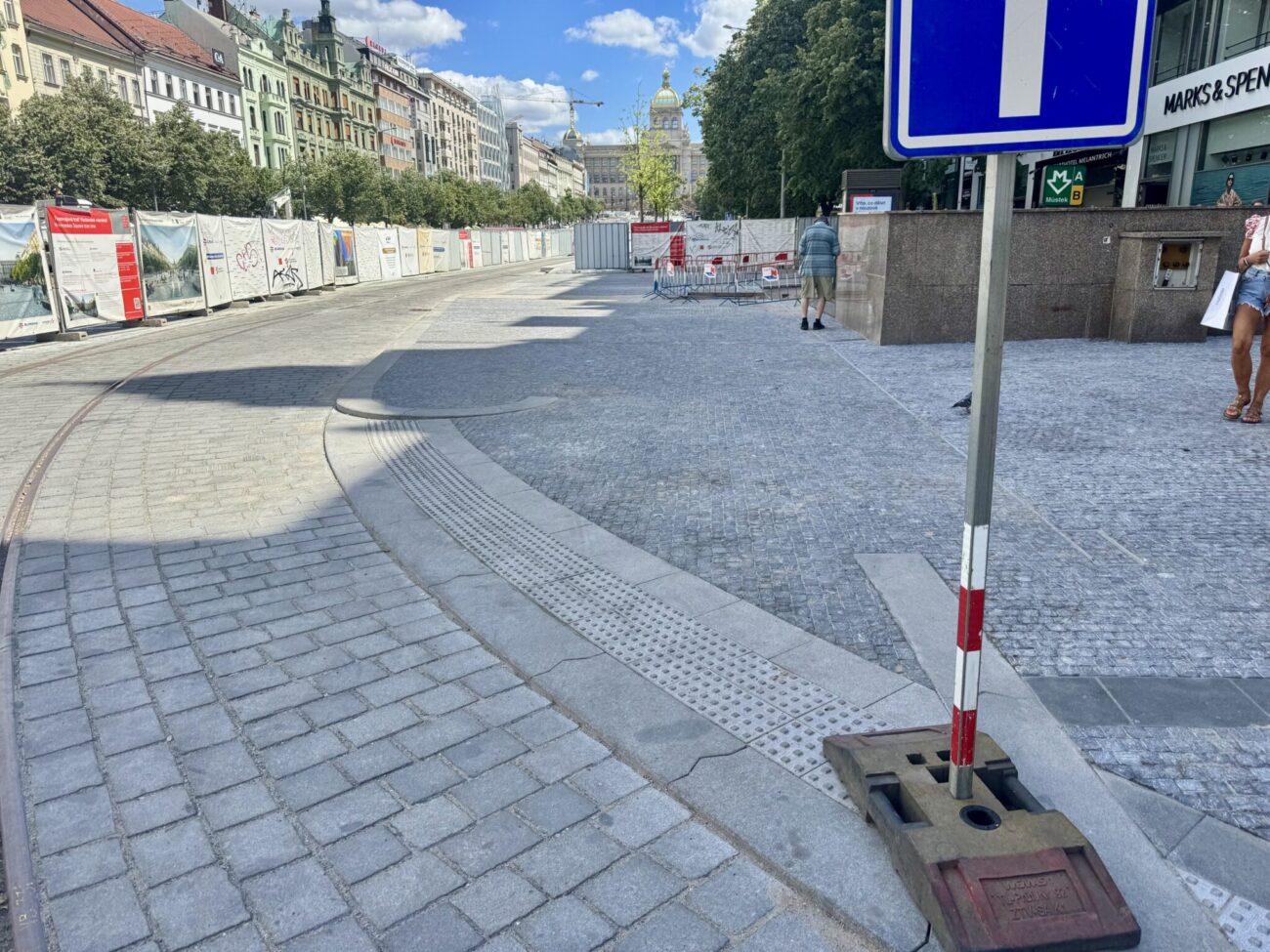
Today, the only clues that something of this nature is being built here are the curb cuts allowing bikes onto the path. Once you are actually on it, though, orientation goes out the window. It isn’t clear where it continues, or where it is actually supposed to lead.
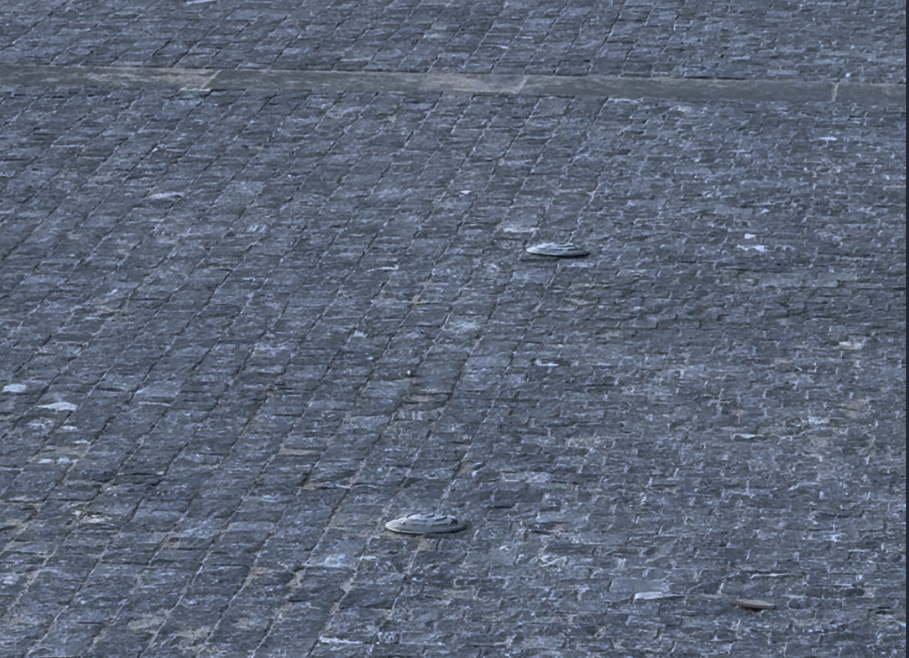
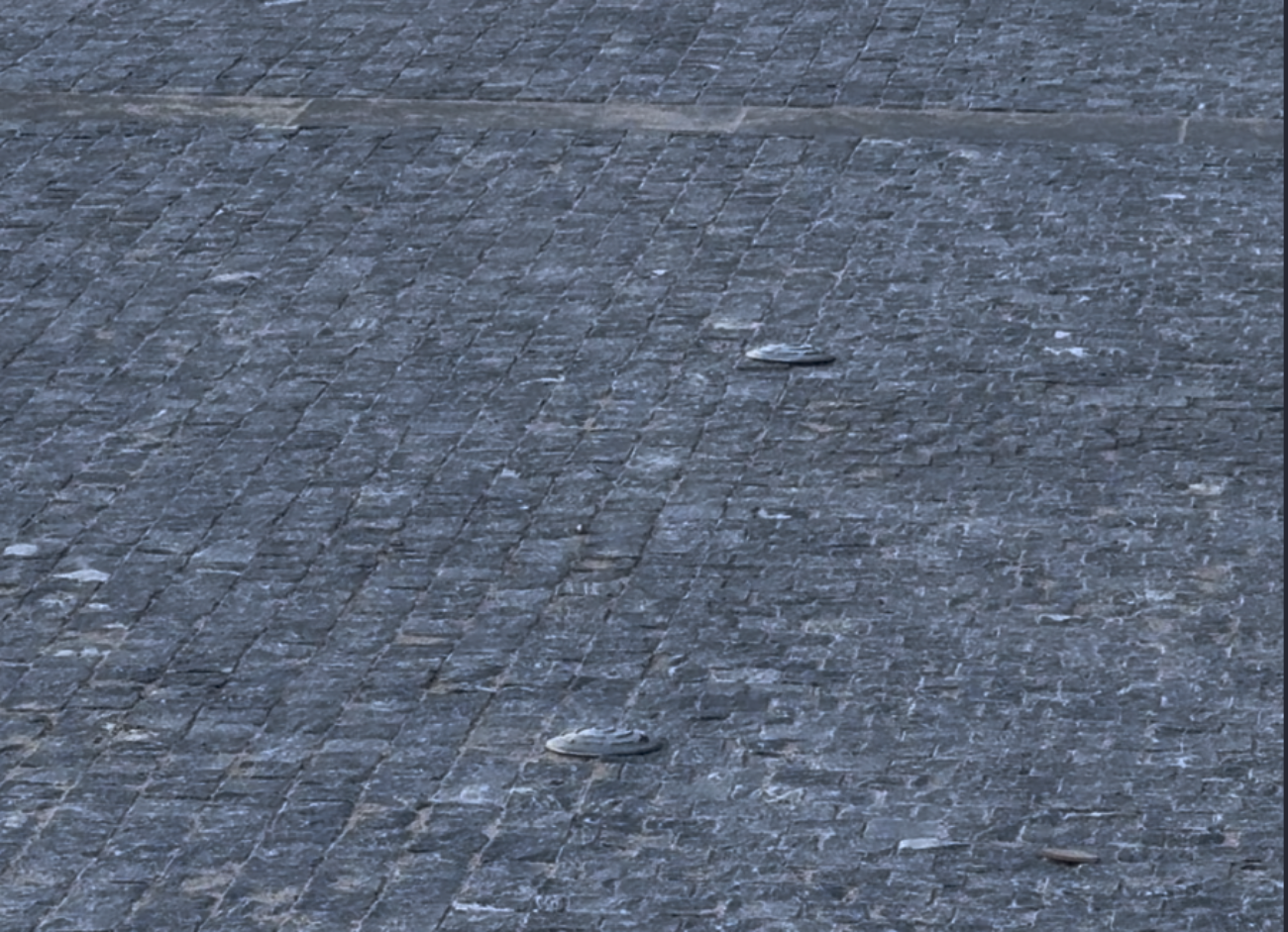
There are three small metal elements installed on-site, presumably meant to outline the route, but most people will likely view them as a random design detail rather than a traffic management solution. Sure, maybe the finishing touches are yet to come, and perhaps more of these elements will be added, but the core parameters are already clear.
The result? Practically everyone will walk along the future bike path without having the slightest clue that it is a space also (or primarily) intended for cyclists.
Granted, even when the project was first introduced, it was clear that the solution would be very understated. We see a similar approach on Smetanovo Nábřeží, for example, where bicycle pictograms are also embedded into the pavement. On Wenceslas Square, however, minimalism has been taken several steps further—to the point where the infrastructure ceases to be legible.
Wenceslas Square is one of the most visited locations in the Czech Republic. Thousands of tourists and people completely unfamiliar with the area move through here daily. You cannot expect them to deduce the existence of a bike path from a subtle grout line in the pavement. Even adding a few bicycle pictograms won’t solve this problem on its own.
If the new corridor is to be truly functional, it must be readable at first glance.
If nothing changes in the design, it could very easily happen that cyclists give up and choose to ride between cars and trams instead, where they will hold up traffic—especially on the uphill climb. Yet, preventing exactly that was the entire point of the project; having a segregated corridor for cyclists makes perfect sense, particularly on an incline.
The good news is that it isn’t too late yet. What we see today is only the first completed section. Most of Wenceslas Square is still under construction or hasn’t even started yet, meaning there is still room to adjust minor details.
Nobody is calling for gaudy red asphalt lanes in the middle of a historic square. But there is a vast middle ground between an invisible grout line and a highly legible solution.
At the very least, they could use a different shade for the mosaic stones, add the bike corridor markings as outlined in the documentation, and install more metal separating studs. Defining the space clearly will prevent misunderstandings and conflict.
If we want new cycling infrastructure to work, it isn’t enough to just draw it into the project documentation. People must be able to recognize it in the real world. It is a shame that Prague hasn’t learned its lesson from the „Muzeum Oasis“ (Muzejní oáza), where an invisible bike corridor and lane have failed to work ever since 2018.
This is an adjusted machine translation using Gemini of this article: https://mestemnakole.cz/2026/07/komentar-cyklostezka-na-vaclavaku-odhalena-jenze-neni-videt/
Líbil se Vám článek? Chcete v Česku lepší podmínky pro cyklodopravu?
Podpořte nás, stačí i 100 korun. 💙🚲
Vyberte prosím částku, poté budete přesmerováni na darujme.cz



komentář