

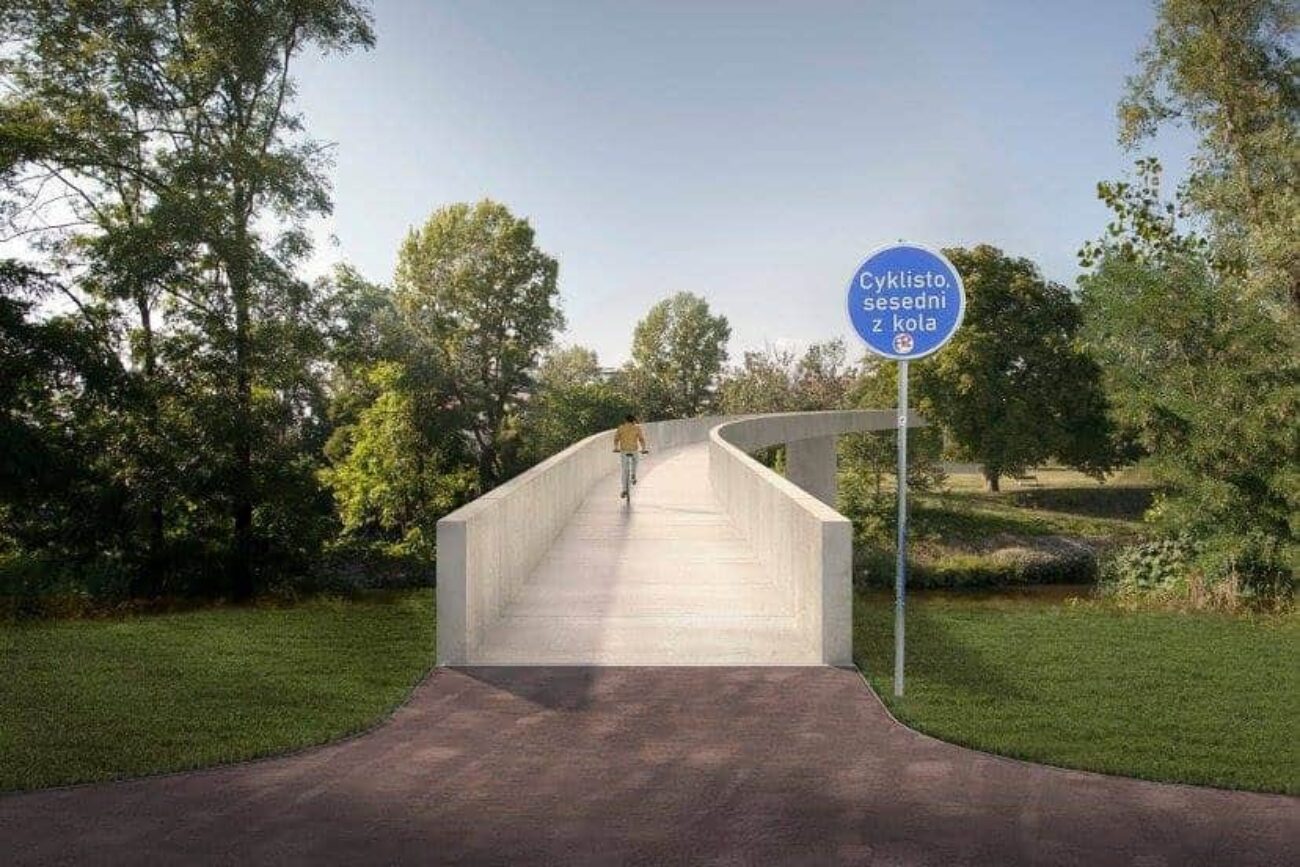
When it comes to the absurdities of urban cycling, I will never cease to be fascinated by a notion held by the majority of non-cyclists—police officers, experts, planners, bureaucrats, and politicians alike: the idea that it makes perfect sense to order people to push their bikes whenever and wherever they see fit. No other violation of the law or local traffic regulations has had such perfectly favorable conditions created for it.
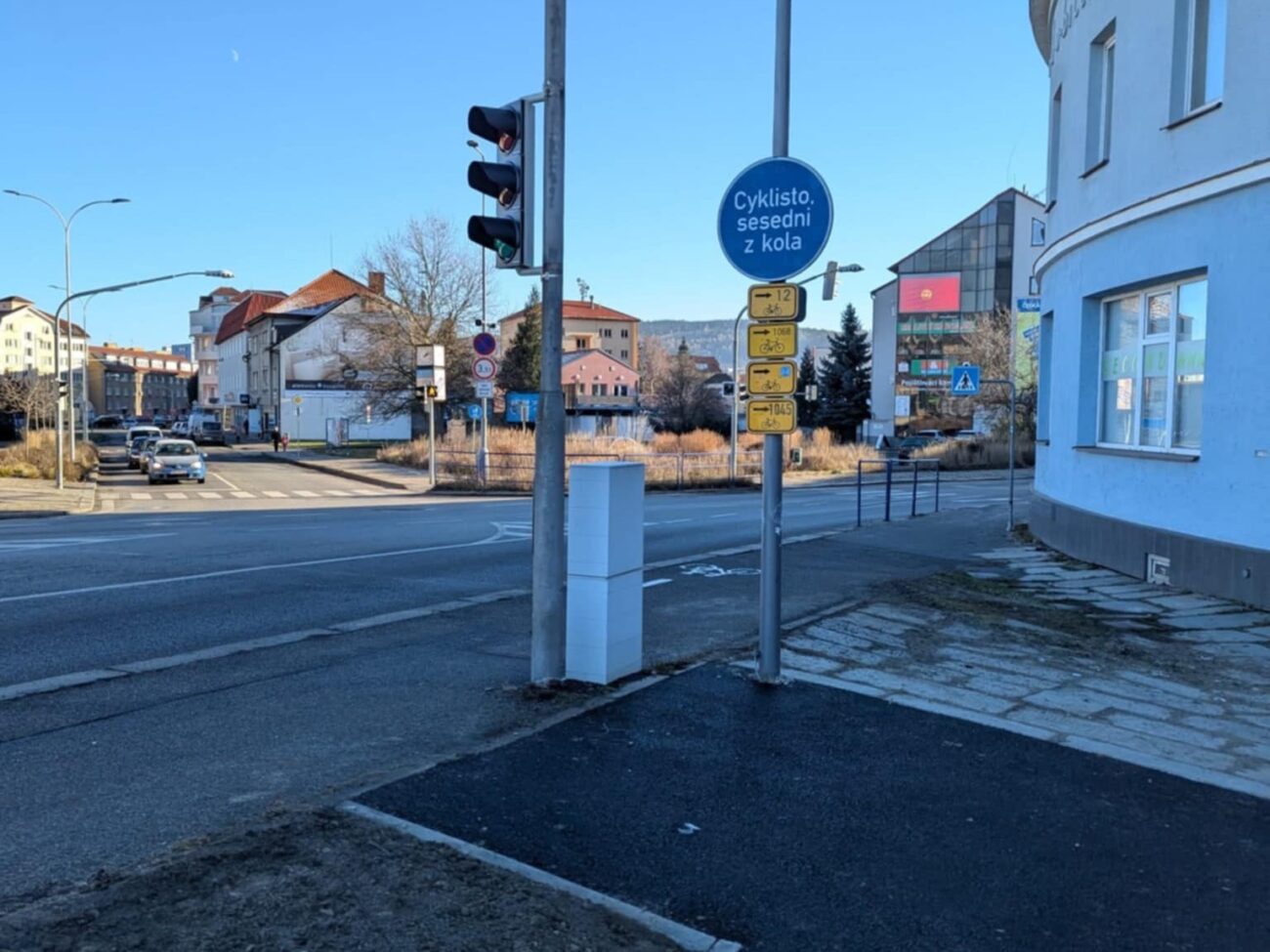
Pushing a bike seems to serve as a blanket solution, and not just for the one or two genuinely dangerous spots in Prague where such a measure is actually desirable. No, „cyclists dismount“ is prescribed universally. It is mandated wherever a path is narrower than regulations allow for a combined volume of cyclists and pedestrians ten times lower than reality. Wherever a bike path approaches a pedestrian crossing, to ensure cyclists don’t accidentally ride across it, cycling is banned for twenty meters on either side just to be safe. It is ordered wherever construction work encroaches on a bike path. Frankly, whenever a planner or bureaucrat doesn’t know what to do with a cyclist, they slap down a „push your bike“ sign, seemingly operating under the assumption that the cyclist will actually do it.
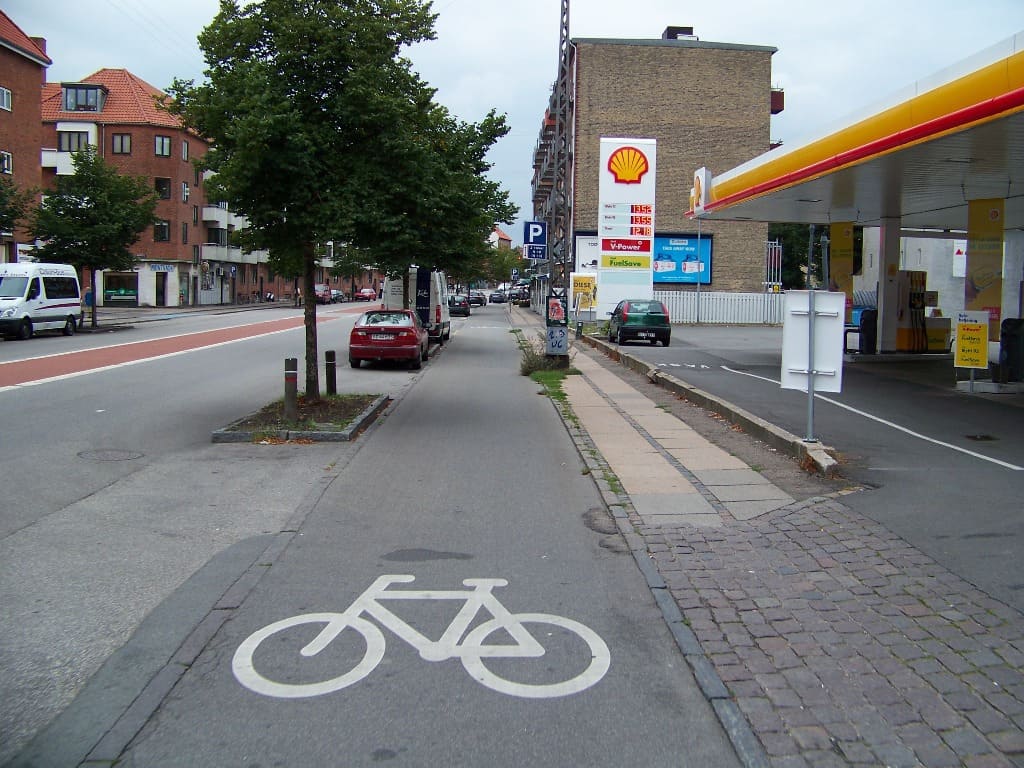
Except they won’t. Stopping, dismounting, pushing the bike, remounting, and starting up again is a maneuver that simply does not happen. Years ago at the famous crossing by the gas station on the A2 route in Podolí, the ratio of people riding vs. pushing their bikes across was clocked at 700 to 2. A cyclist pushing their bike either has a flat tire or is too drunk to get on it. You don’t dismount a bike; you ride it.
It makes perfect sense. While a motorist controls „their world“ with almost imperceptible movements of their ankles—using the brakes and engine to handle stopping and starting at crossings and bike passages—for a cyclist, stopping and getting off a bike is the pedestrian equivalent of climbing a flight of stairs. Put a stepladder in front of a pedestrian crossing and tell people to climb up and down it, and the first normal person will kick it into the ditch. No one expects motorists to run a lap around their car at a stop sign for health reasons. Yet, forcing cyclists to push their bikes is a different story; that can be dumped on them anywhere.
A massive absurdity is pushing a bike across a pedestrian crossing that interrupts a bike path. Do you honestly think a cyclist earns any right-of-way by walking their bike across? Go ahead and try it sometime. The mere fact that you have a bicycle with you makes you traffic scum in the eyes of many, whether you are pushing it or riding it. You often won’t get „pedestrian priority“ anyway. So why bother?
By riding cautiously, yielding to traffic, and timing your crossing into a gap between cars, you achieve much better coexistence with motorists than by „disguising“ yourself as a pedestrian—a status they don’t grant you anyway. It’s a rare opportunity to wave a hesitant driver through, signaling that they have the right-of-way. Sure, every second driver will grumble about „that cyclist riding on the crosswalk.“ But in the end, they will subconsciously appreciate that you didn’t dismount and shove your bike directly in front of their bumper.
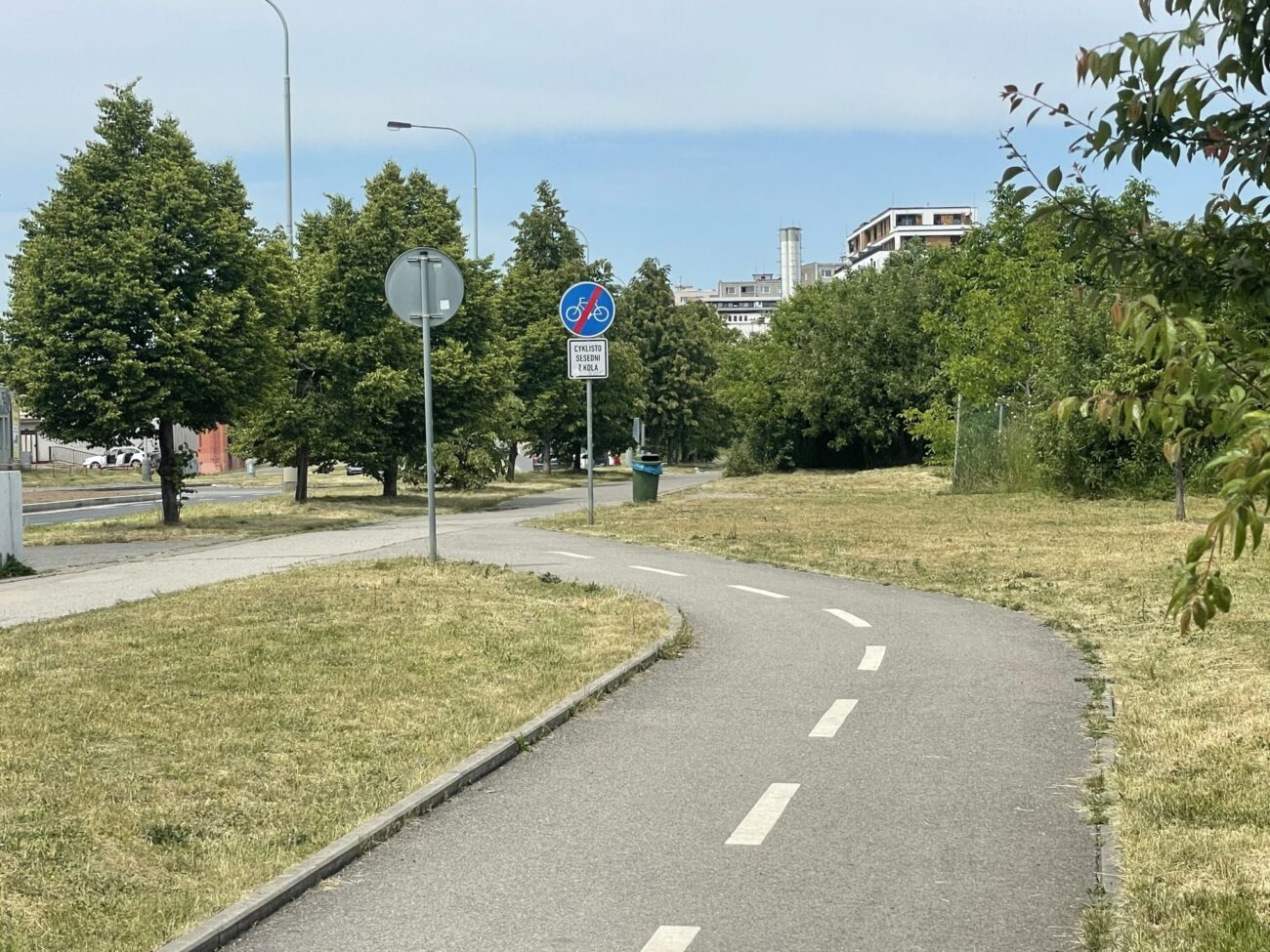
But that isn’t even the biggest absurdity. The ultimate absurdity occurs when a shared-use path ends at a pedestrian crossing. You might think a cyclist would simply yield and turn into the roadway, right? Not in the Czech Republic! According to the interpretation of numerous officials, a riding cyclist must not even touch the crosswalk perpendicularly. Therefore, the „correct“ procedure is as follows:
Or conversely:
If we wanted to dissect this situation further, a driver (and therefore a cyclist) is technically not allowed to stand with a vehicle (or bike) on a crosswalk or in its immediate vicinity. So, all things considered, they can’t even legally mount or dismount directly on the crossing. It would be best if they didn’t appear on the crosswalk with a bicycle at all—perhaps they should just shove the bike into their pocket while crossing. To be even safer, they should probably walk the bike to a building entrance, where presumably nothing forbids them from remounting, and get on there. Or maybe push the bike along the edge of the road—as a pedestrian on the left side, of course—then mount, pull a 180-degree turn, and ride off in the opposite direction?
Indeed, if we accept the premise that a cyclist must not enter the roadway from a bike path via a pedestrian crossing, why not interpret other parts of the legislation just as creatively? Will we eventually find that cyclists need special „transit zones“ marked on roads to transition between being a pedestrian and a cyclist, just so they don’t surprise a driver by suddenly becoming a pedestrian and gaining „rights“ on a crosswalk?
A proper planner, well aware of the need to get a binding stamp of approval from the Czech Police for their project, naturally insures themselves against the tendency of cyclists to ride through crosswalks by wrapping the crossing in twenty-meter „push your bike“ zones on either side. It is then hardly surprising that cyclists view „start and end of path“ signs as valid only from the edge of the road as soon as one is in sight. The more nonsensical the cycling restrictions are in places where they only serve a shaky interpretation of the law, the less cyclists will respect them where actual danger lurks. For heaven’s sake, every cyclist who has ever ridden across a crosswalk knows perfectly well from the behavior of drivers that they do not have the right-of-way there.
But—and this might make some people’s heads explode—there are places where a cyclist does have priority over cars on a bike crossing. For instance, when turning through a signaled crossing where the cyclist is going straight. Or in many countries abroad. There, they understand that a crossing is meant to protect cyclists, and that useless commands to push a bike are a laughing stock to everyone who rides. Unnecessary cycling bans clearly confirm to cyclists that the rules in this country don’t give a damn about bicycles. And where the rules don’t give a damn about people, no rules apply except the instinct for self-preservation.
Cyclists are actually doing quite well at that survival game, considering motorists still hold a 60% majority in fault when it comes to collisions with cyclists. But still: the status quo—where cyclists break rules that are nonsensical to them and threaten no one—also serves to ensure they are blamed for breaking rules, thereby further pushing them to the margins of polite traffic society.
In our country, you can only get away with breaking the rules if you are in the same boat as motorists. Every driver knows that parking is difficult, and exceeding the speed limit by 10 km/h in a village serves traffic flow well. The fact that a crossing child cannot be seen past that parked car, or that a rushing driver occasionally strikes a pedestrian, is clearly the fault of those who weren’t paying enough attention; after all, even the BESIP (Road Safety Department) campaigns say so.
„Cyclists are to blame for whatever happens to them because they ride on crosswalks.“ This is such a convenient conclusion that it would be an eternal shame to ruin it with, say, a statement from BESIP clarifying that nothing in the law actually forbids cyclists from riding across crosswalks. Especially when the infrastructure in many places quietly counts on it—otherwise, cyclists would have to perform absurd acrobatics.
But you know what? If you ostentatiously walk your bike across crosswalks, push it into the road, demand what you are entitled to as a pedestrian—namely, priority—and hold up drivers with a fifteen-second walk that you could have completed in five seconds on the saddle, perhaps we will finally see that statement from traffic authorities: that for the flow and safety of traffic, a cyclist riding across a crosswalk without priority is better than a pedestrian pushing a bike with it.
This is an adjusted machine translation using Gemini of this article: https://mestemnakole.cz/2026/06/cykliste-nesesedaji/
Líbil se Vám článek? Chcete v Česku lepší podmínky pro cyklodopravu?
Podpořte nás, stačí i 100 korun. 💙🚲
Vyberte prosím částku, poté budete přesmerováni na darujme.cz






komentář